
Security Standards Strengthened Cash or Crash Live Security across UK

As someone who spends a lot of time online live games, I’ve seen numerous sites come and go. The ones that last, those you’d stick with, have a common characteristic: they take player security deadly seriously. I’d like to cover the exact safeguards that define the cash or crash live adventure for players in the UK. A heart-pounding game is all well and good, but that rush is meaningless if you’re not secure. From the second you think about signing up, an entire framework of tech, compliance, and human oversight activates to protect your data, funds, and right to fair play. Here’s a breakdown of how that system works, and why it’s the most important part of your session.
Why Security is the Real Prize for UK Gamers
Forget the rising multiplier briefly. The true bedrock of every quality gaming site is trust. For British players, protection is not an afterthought. It’s the absolute minimum. You cannot focus on the strategy and fun of a game like Cash or Crash if you’re worried about how your personal data is handled, or if your funds is secure. A genuinely secure site transforms a wagering session into a real entertainment event. The UK’s regulatory structure establishes a remarkably high bar. When a operator doesn’t just barely meet that standard but strives for more, it reveals much about their ethos. Treating security as the top prize benefits all even before the game starts.
Building a Base of Trust from Players
Trust in the online world is built through actions, reliably and openly. I lean toward platforms that explain their safety protocols in plain English, right out in the open. When Cash or Crash Live puts its regulatory approvals, encryption standards, and game integrity certificates where anyone can see them, it demonstrates intent. It says your security is their main concern, not an add-on. This core changes how you engage with the game. You transition from being a skeptical visitor and begin to feel like a player in a space that’s been intentionally secured. That’s the difference between a site you visit once and one you save as a favorite.
The UK’s Regulation Gold Standard
Managing a gaming platform in the UK means following some of the toughest rules globally. As a player, that’s your most significant benefit. The UK Gambling Commission (UKGC) is a strict, rigorous regulator centered on player protection. Their demands around anti-money laundering (AML), protecting player money, and age verification are comprehensive and mandatory. For a live game like Cash or Crash to hold a UKGC licence, it has already passed a demanding series of inspections. This is not a one-time event. It’s a process of ongoing review. Having the backing of a state-supported, independent body overseeing provides a degree of confidence that no showy advertisement can ever surpass. It sets the bar, and it is critical.
Monetary Protections: Depositing, Payouts, and Assurance
Your money needs to be as protected as your private information, and the measures here are just as strict. The primary thing I check for is segregation of customer funds. This indicates the capital you put in is held in divided, safe accounts, entirely separate from the company’s own operating funds. Should any issue happen to the firm, user funds are secure and available for reclaim. Then we have the security of the payments themselves. Whether you pay with a debit card, an digital wallet for instance PayPal or Skrill, or a wire transfer, each transaction goes through PCI-DSS conforming systems. This is the global standard for handling card details. Withdrawals get the identical thorough handling, with rigorous ID verification to make sure money only ever goes back to its lawful possessor.
Continuous Protection Reviews and Unbiased Oversight
Effective protection is never a one-off project. It’s an ongoing process that requires constant attention. That is the purpose of ongoing independent oversight. Trustworthy platforms such as Cash or Crash Live have their full operation subjected to regular, frequently unannounced, audits by the UKGC and other monitoring bodies. Picture these auditors as safety inspectors, constantly looking for a vulnerable spot. On top of this, many companies engage ethical hackers, known as “white hats”, to deliberately attack their own systems. The goal is to find and fix vulnerabilities before anyone with malicious intent can uncover them. This mindset of unyielding testing and refinement is what keeps the defensive walls around your gaming strong.
Forward-thinking Problem Gambling Protection in the UK
Real security goes beyond guarding against outsiders. It equally concerns giving you the tools to manage your own play. The UKGC mandates some of the most extensive responsible gambling features you’ll find, and a good platform makes them easy to use. I’m mentioning deposit limits you can set for a day, a week, or a month. Reality-check reminders can pop up during a long session. Tools to take a break (Time-Out) or close your account are uncomplicated and immediate. These options aren’t buried in the footer of the website. They are prominent in your account dashboard. It’s a proactive stance that indicates the platform prioritizes your sustainable enjoyment, not just the next spin. This responsible framework is a essential piece of the UK’s gaming safety net.
Your Part in the Security Partnership
This system handles the bulk of the effort, but users are the vital outermost shield. Consider it a collaboration. My primary advice is easy: create a powerful, unique password and enable two-factor authentication (2FA) each time it’s offered. This one step adds a double lock on your account door. Additionally, be watchful for phishing scams. They are bogus emails or texts that pose as legitimate helpdesk communications. A genuine platform will never ask for your secret phrase or complete card details over email. In conclusion, keep the applications and virus scanner on your personal device updated. By implementing these effective steps, you work directly with the site’s own systems to establish a extremely strong protection configuration.
Fortress-Level Data Protection: Your Information is Locked Down
Here’s what goes on in the background. Every single move you make with Cash or Crash Live is shielded by SSL (Secure Socket Layer) encryption. Picture a private, impenetrable tunnel running from your device directly to their servers. When you type in your login details or confirm a withdrawal, this tech converts that data into a unreadable code. To anyone attempting to access it, it’s just meaningless text. This is the same standard used by high-street banks. On top of this, their approach to data follows a principle of minimum collection. They only request and retain what is strictly required to run the service. Your personal information is not a commodity for them to sell. It’s a responsibility they defend with serious technology.
The Protectors of Fair Play: RNGs and Real-Time Transparency
In any session that relies on the suspense of a increasing factor, fairness is paramount. You must believe that every withdrawal request and every crash risk stems from pure, unblemished randomness. Here verified Random Number Generators (RNGs) and the character of live streaming join forces. This game’s central mechanisms are driven by RNGs that are checked constantly by external third-party companies like eCOGRA or iTech Labs. These aren’t the site’s own tools. They are outside, validated platforms that deliver a guarantee: every outcome is unpredictable. Next, the presenter adds a manual aspect of authentication that I find equally significant.
Verified Random Number Generators (RNGs)

An RNG’s accreditation is its passport to legitimacy. A external testing firm doesn’t simply perform the software a glance. They subject it through millions of trials, scanning for any probabilistic weakness or hint of a sequence. The platform obtains a public certificate it can show players. For Cash or Crash, this means the coefficient’s rise and the exact point of the burst are decided by this certified, unforeseeable digital process. There’s no covert engine watching user behaviour and adjusting probabilities. This is audited chance, that is the single valid basis for a fair contest. I consistently seek such certificates. Those are the unacclaimed, technical warrantors of the game’s fairness.
Presenters and Real-Time Verification
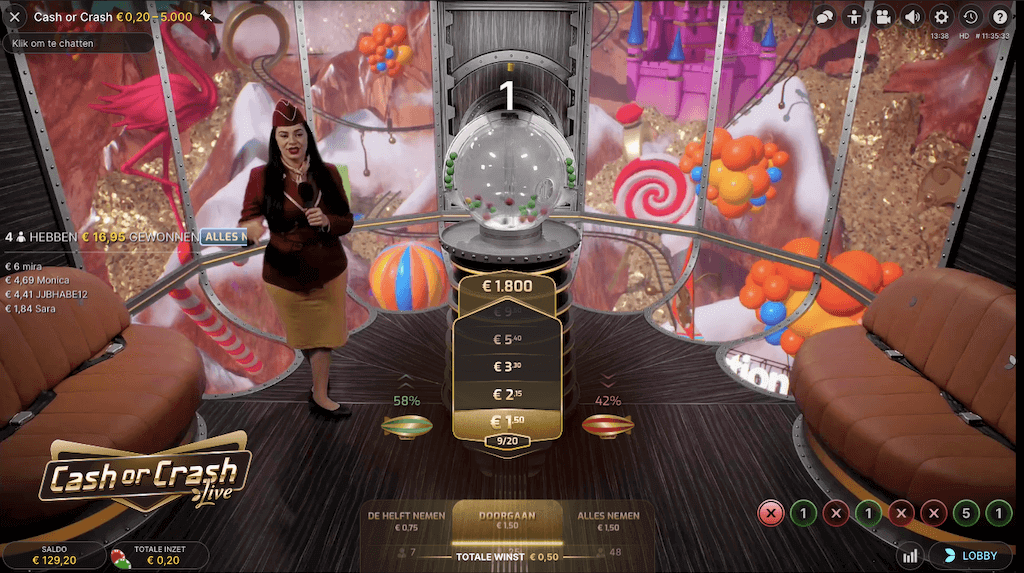
If the Random Number Generator is the invisible motor, the presenter is the visible guide and observer. Watching a genuine human operate the session from a studio set in real-time does beyond establish mood. It establishes a continuous loop of validation. You witness the game occur with your personal sight. The streamer’s gestures, the studio set, and the way the stream integrates with your display create a chain of trust that completely automated games are unable to give. It connects the intricate digital backend to a recognisably human experience. This clarity is tangible. It confirms that what you see is real, which makes the victory of a well-timed cash-out all the greater rewarding.
Transparent Communication: No Sneaky Print, Just Unambiguous Facts
Uncertainty and hidden terms are a quick way to undermine a player’s confidence. I respect platforms that outline their safety and equity policies in clear, straightforward language. Their terms of service, confidentiality policy, and game rules should be simple to locate and similarly effortless to grasp. This transparency also applies to troubleshooting. Is there a crystal-clear, direct way to submit a privacy issue? Does their customer support team really understand how to aid? When a platform is candid about its functioning and its protection measures, it displays confidence and honesty. This clear communication weaves all the systems together into a coherent interface you can genuinely depend upon.
What Lies Ahead for Secure Gaming: Progress Blends Accountability
The path forward for safe gaming looks interesting, precisely where innovative tech aligns with a care obligation. We already observe things like biometric verification, via fingerprint or facial recognition, for more convenient and secure entry. Blockchain systems might present fresh approaches to make transactions and game fairness completely verifiable. Meanwhile, AI and ML are utilized out of sight, not to affect gameplay, but to spot unusual betting behaviour that might suggest someone is struggling. This allows for earlier and more helpful outreach. The coming era of safe gaming in the UK centers on applying these instruments to bolster security, make operations more transparent, and enhance player well-being. It suggests a realm where the excitement of the game and the certainty of safety are perfectly balanced.