[Philippines] Dumasilag Indigenous People’s School andDangcagan Special Education (SPED) School Opening Ceremonies
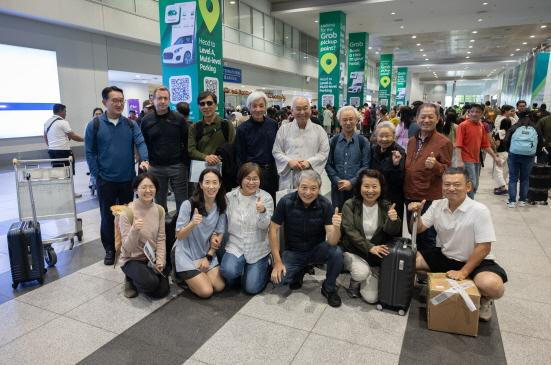
On December 8, 2025, JTS Chairman, Venerable Pomnyun and a delegation of about 20 people traveled approximately 3,400 km from Korea to Mindanao, Philippines to tour the schools JTS had built in the Philippines over the past year and attend the opening ceremonies.
In 2025, JTS Philippines constructed five special education schools (SPED) and ten Indigenous People (IP) schools. From December 9 to 12, the delegation attended the opening ceremonies of four SPED schools and four IP schools.
Hope Built in an Indigenous Village at the End of a Rugged Mountain Path
At 5:40 a.m., the JTS delegation departed Valencia and headed to Dumasilag village, where the school opening ceremony was to be held. Dumasilag had long been underserved in terms of educational opportunities, as it was once a base for the NPA (New People’s Army). Thanks to the collaboration between JTS and Quezon municipality, a school has finally been established there.
.Dumasilag village, home to approximately 470 Tigwahanon Indigenous people, is located in rugged terrain with limited accessibility, making school construction extremely challenging. A total of five preliminary site surveys were conducted before construction began. The path to the site was so difficult that walking was easier than using a motorcycle. Although a new road was built to transport materials, heavy rains during construction washed away sections of the road, requiring additional work by the Quezon municipality. After several rounds of repairs, vehicles can now reach the school entrance, but during the construction process, a truck carrying materials became stuck in the muddy road and was stranded for five days, causing significant losses for the supplier. Despite these numerous challenges, the school was finally completed thanks to the ongoing cooperation and efforts of the Quezon municipality.
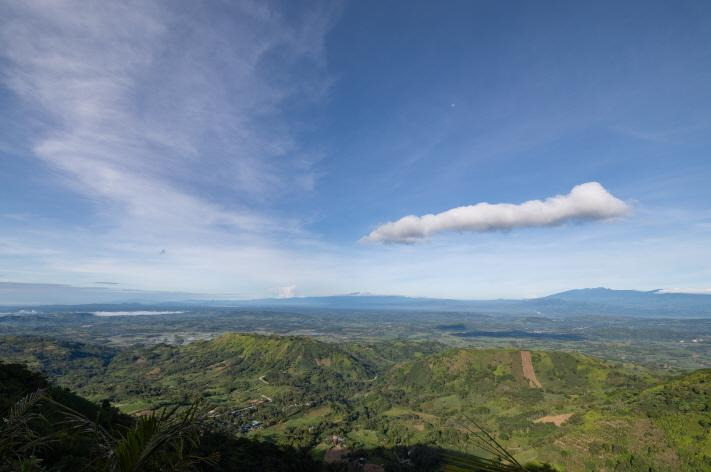
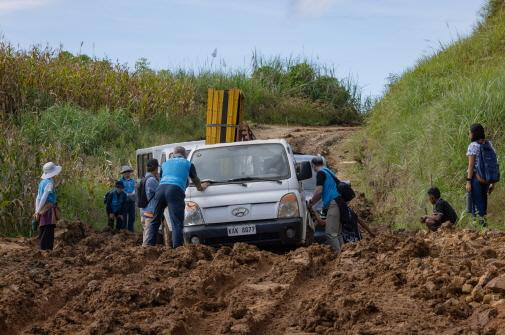
The delegation traveled by bus along the winding mountain roads before reaching an unpaved path, where they transferred to trucks and vans. The vehicles jostled heavily on the muddy mountain trail, and at one point, the material transport vehicle ahead became stuck in the mud, unable to move. Ultimately, the delegation had to walk for about 30 minutes to reach the school.
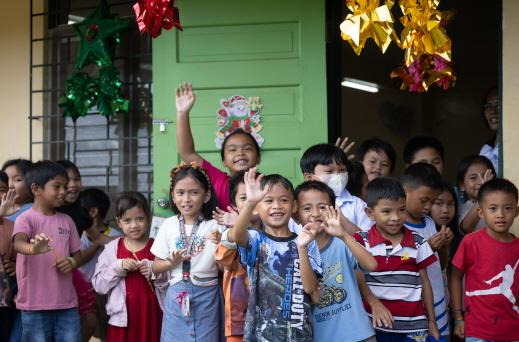
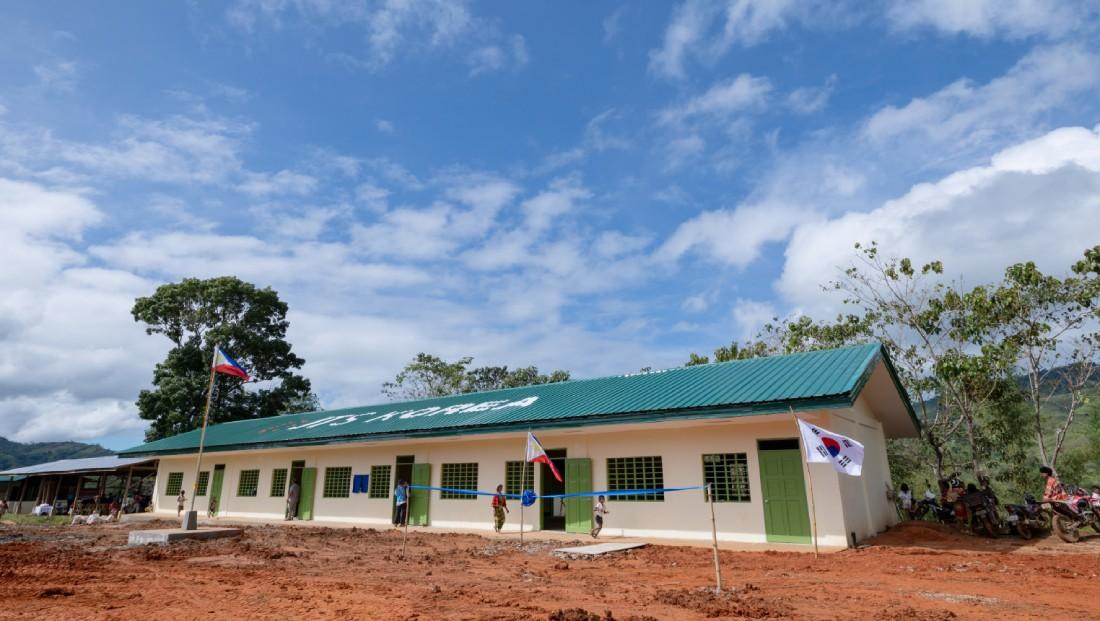
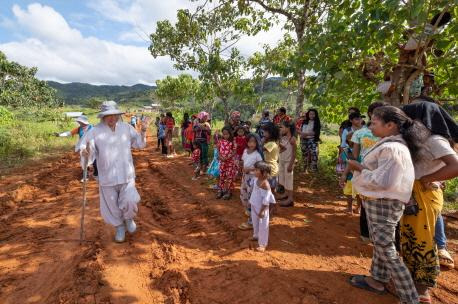
Upon arriving at the school, the delegation was warmly welcomed by village residents and students. The newly built school featured four classrooms, restrooms, and teacher accommodations. The children were freely playing around the school grounds.
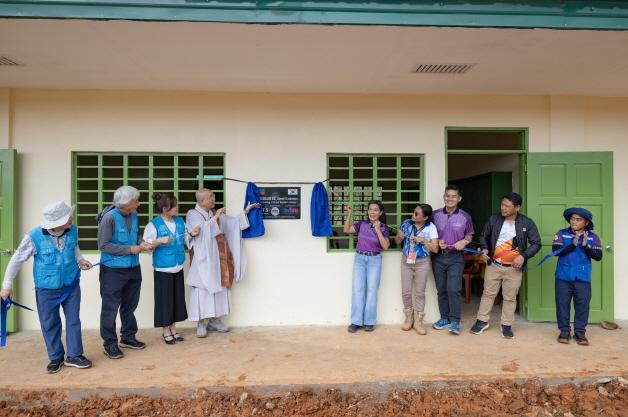
At 9:20 a.m., after the Bukidnon Provincial Superintendent of Education, officials from the Department of Education, and representatives from the Quezon municipal office had all arrived, the opening ceremony began. The JTS delegation, along with local government and education officials, stood together in front of the school to conduct a ribbon-cutting and unveiling ceremony, officially marking the completion of the school.
The attendees then moved to the event area next to the school, where they sang the national anthems of the Philippines and the Republic of Korea. The opening ceremony continued with a welcome address by the Vice Mayor of Quezon and a progress report by Mr. No Jae-guk, Director of JTS Philippines.
Following this, the students performed traditional dances, and a presentation ceremony was held to hand over the school completion certificate, the school keys, and clocks for each classroom. As a token of appreciation, Venerable Pomnyun presented English editions of his books to the education officials and technicians who had made significant contributions to the school’s construction.

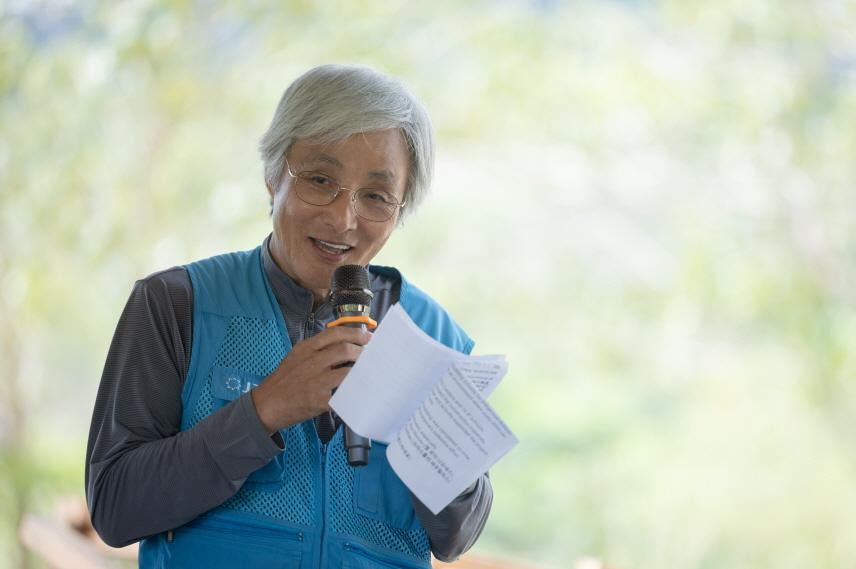
In his congratulatory remarks, Venerable Pomnyun expressed deep gratitude to the Quezon municipality, construction technicians, JTS Philippines, and education officials who dedicated themselves to completing the school. He emphasized that building a school in such a remote and hard-to-reach area required the cooperation and effort of many people, and noted that this school is the result of everyone’s collective effort.
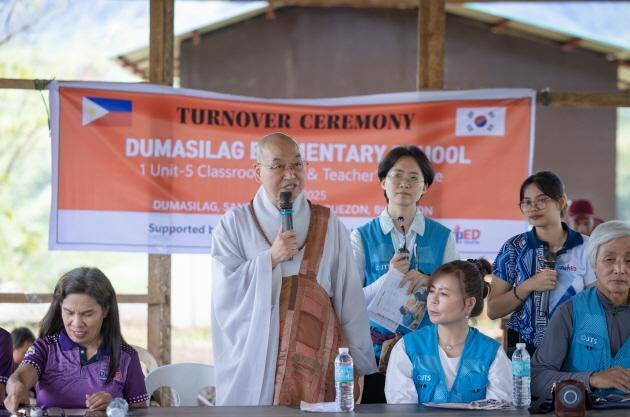
“I am delighted to join you today for the opening ceremony of Dumasilag Elementary School, and I sincerely congratulate everyone on its completion. As you saw on your way here, this area is difficult to access due to poor roads. Building such an excellent school in a place like this required the dedication and effort of many people. First, I would like to express my deep gratitude to the Mayor of Quezon for making the road accessible. I also thank the construction engineers who transported materials and built this wonderful school under challenging conditions. My thanks go to JTS Philippines for securing and supplying quality materials, and to the Department of Education for dispatching teachers to serve the children in this remote area.”
“Many people have come together to make this school a reality. Truly, this is a school that we all built together. The reason we collaborate in this way is that every child in the world has the right to receive an education on time, regardless of race, skin color, religion, or gender. Yet, children living in remote areas often struggle to enjoy even this basic right. In conflict-affected areas like Dumasilag village, safety concerns make it difficult to send teachers, which widens the educational gap even further. Children with physical disabilities also face limited access to education. For this reason, JTS has placed special focus on Indigenous children, children with disabilities, and children in conflict zones, continuing support under the principle that ‘all children must have the opportunity to learn on time.’”
“At first, cooperation with the local government and the Department of Education was limited due to their lack of resources. However, recently the Philippine Department of Education has taken a strong interest in the education of these children and has actively stepped in, changing the situation. Policies and support for children in remote areas and for children with disabilities are expanding rapidly, and local governments are now actively participating, bringing about meaningful change. All of this progress has been made possible through the efforts of local government and education officials, and I would like to take this opportunity to express my gratitude once again. I have also heard that the Department of Education recently even organized a marathon to raise funds, contributing to school construction through the proceeds. This is truly a remarkable and moving effort. JTS fully supports these initiatives and plans to provide educational equipment, such as desks and chairs, to the newly built schools. Today, we also saw children dancing on the uneven dirt floors. If possible, JTS would like to help improve this space with concrete so that the children can play and learn more safely and comfortably.”
“But in truth, more important than any building is the education of the children. To achieve this, first, good teachers must be consistently assigned to the school and teach diligently. Second, the children themselves must attend school regularly and commit to learning. Third, the Department of Education must provide sufficient textbooks. If basic school supplies such as notebooks or pencils are lacking, JTS will step in to provide support.”
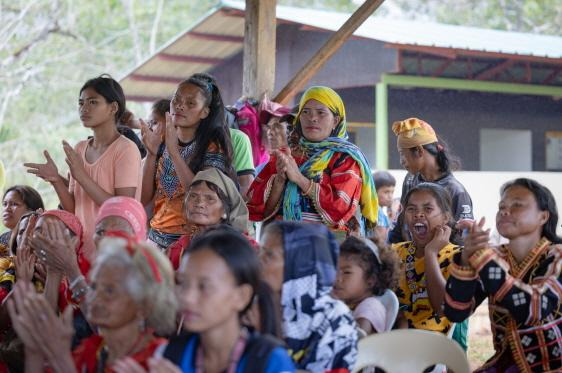
After Venerable Pomnyun’s congratulatory remarks, the municipal technical officer delivered a message of thanks on behalf of the mayor. He noted that, given the limited local government budget, the construction of Dumasilag School holds great significance for the children and described the project as an exemplary starting point for cooperation between JTS and the local government.
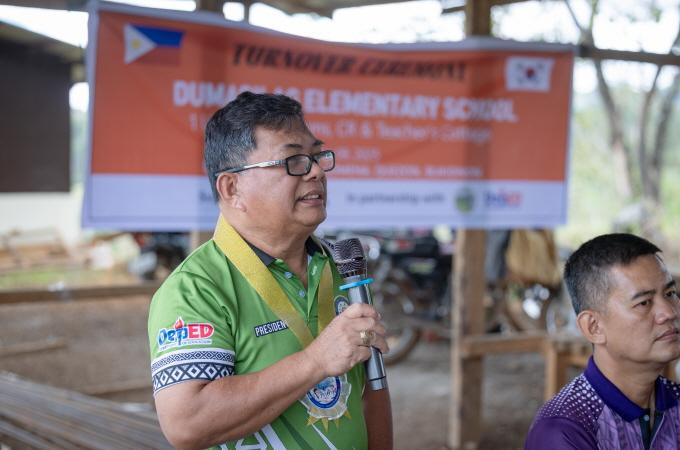
Next, the Bukidnon Provincial Superintendent of Education highlighted the reality that, until now, children in Dumasilag had to walk 5–10 km along mountain paths to reach the nearest school, emphasizing that the completion of this school is an important first step in addressing educational accessibility. The Department of Education pledged to take responsibility for teacher assignments and class operations, actively supporting the children so they can enjoy the joy of learning. They also urged parents to ensure their children attend school to secure their right to education and expressed deep respect and gratitude for JTS’s dedication and generosity in coming to such a remote area to build the school.
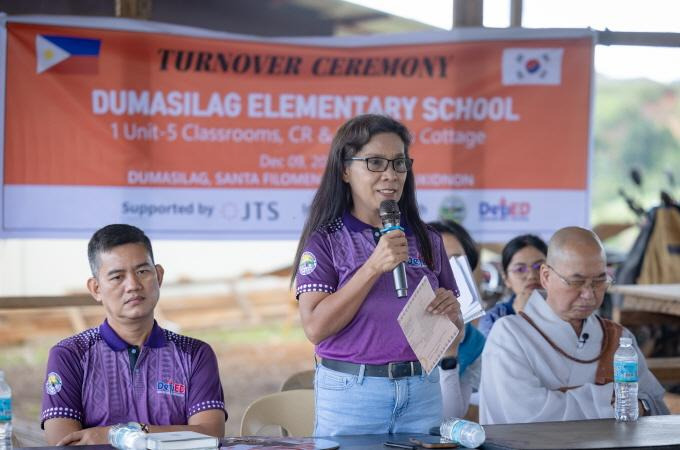
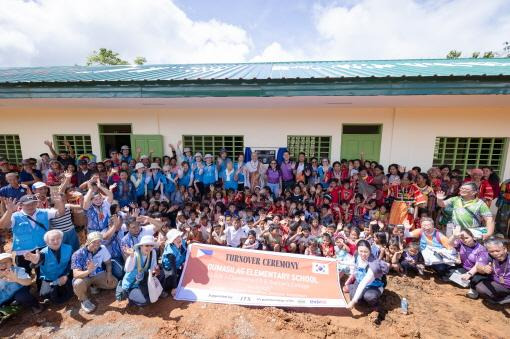
Finally, the Datu (tribal chief) and the Sitio leader (village head) expressed their gratitude to the JTS delegation and presented a plaque of appreciation, officially concluding the opening ceremony. Afterwards, the attendees planted a commemorative tree in the schoolyard, praying for the children’s healthy growth and bright future. After a group photo, snacks were distributed to the children, and the ceremony concluded with everyone moving into the classrooms to share cassava, sweet potatoes, and bananas that the villagers had carefully prepared.
A Safe Place to Learn, A School Where Hope Grows
At 2:20 p.m., the delegation arrived at Dangcagan Special Education School (SPED). As the JTS team stepped off the bus, teachers, parents, and students all cheered and warmly welcomed them.
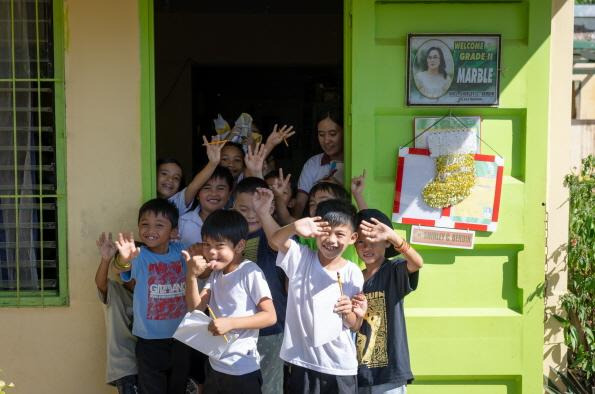
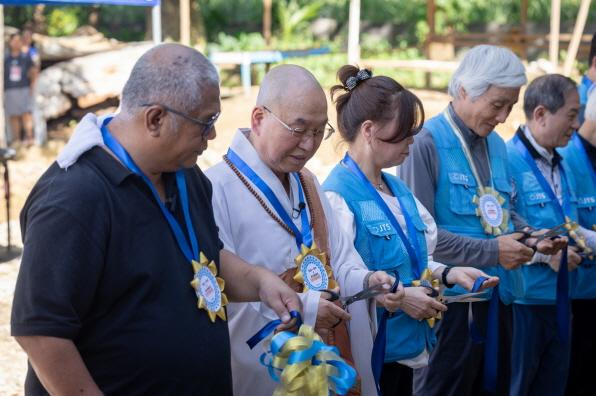
The delegation then moved in front of the newly built school, where a ribbon-cutting ceremony was held first to commemorate its completion.
First, the principal delivered a welcome address to the JTS delegation, followed by a progress report from Mr. No Jae-guk, Director of JTS Philippines. Mr. No expressed his gratitude, saying, “To build Dangcagan Special Education School, JTS provided construction materials, while the local government contributed manpower and managed the construction, working together in close cooperation. Since groundbreaking in February 2025, we have been able to complete the school on schedule today thanks to everyone’s collaboration.” He also gave special thanks by mentioning the municipal chief engineer, the on-site technicians, and the site manager individually.
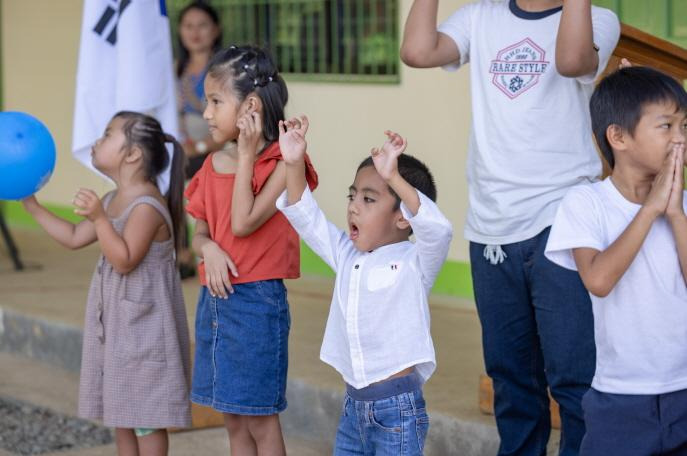
Next, the students performed on stage. The Dangcagan SPED students showcased the dances and songs they had been practicing. Although some movements were physically challenging, their unique ways of expressing themselves were deeply moving.
Next, the school completion certificate, English editions of Venerable Pomnyun’s books, the school keys, and clocks for each classroom were presented, and the school expressed its gratitude by presenting plaques of appreciation to JTS and the municipal office.
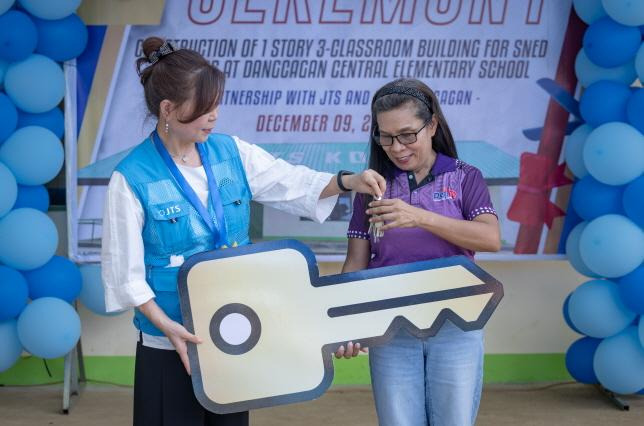
Then, Venerable Pomnyun stepped forward to deliver his congratulatory remarks.
“I hope this building will be a useful place for your studies in the future, and I sincerely congratulate you on its completion today. Every child born into this world, regardless of their circumstances, has the right and freedom to receive an education on time. Yet, children with disabilities or those born in remote areas often face great difficulty accessing educational opportunities. Especially in the case of children with disabilities, no matter how much parents want to educate them, it is very difficult to manage on their own. Education should not be left to individual parents alone; society must come together to create an environment where children can learn. That is why today, JTS, the local government, and the Department of Education have joined forces to build this school.”
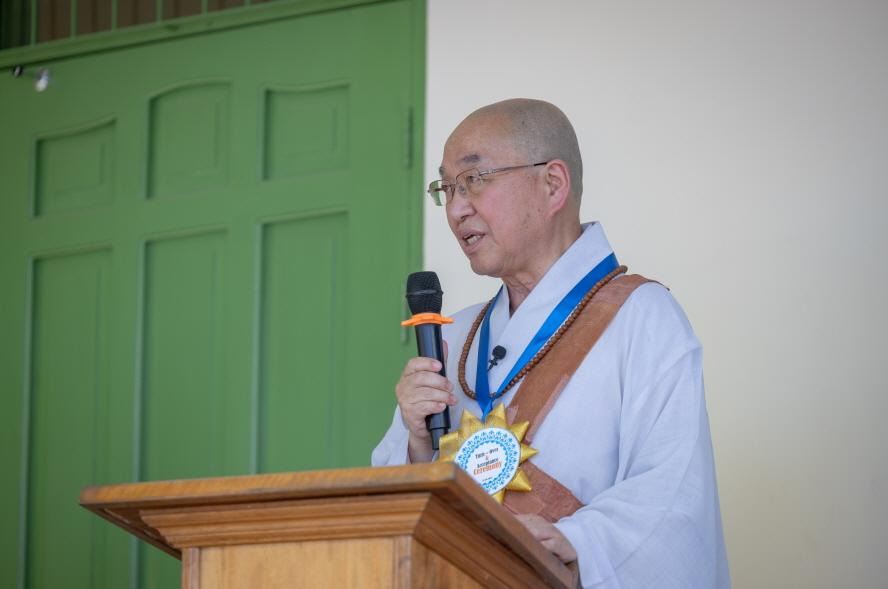
Having a disability does not mean being inferior; it simply means facing challenges in daily life and in the learning process. That is why additional effort and support are necessary. Children who cannot see must study in Braille, which requires special learning tools and extended practice. Children who cannot hear need extra time and effort to learn sign language. Children with limited mobility require various assistive devices and support from those around them. For these reasons, children with disabilities need specialized materials and classroom setups that differ from those of non-disabled students. The reason we built this school today is to create an environment where children with disabilities can learn just like any other child.
I hope this school becomes a safe space where parents can confidently send their children to learn, and a starting point for new hope. I also hope it serves as a place where students learn to be the eyes for friends who cannot see, the ears for friends who cannot hear, and the hands and feet for friends whose movement is limited.
To teach the children effectively, each teacher must be responsible for a small group of students, which requires a greater number of teachers and more investment in education. We deeply appreciate the local community’s understanding of this need. In particular, we are very grateful to the Dangcagan local government, the mayor, and the municipal council for allocating the budget to support the construction of this school. It is also very meaningful that the Bukidnon Department of Education has recently shown strong interest in the education of children with disabilities and has been establishing special schools in each area.
“Let us continue to work together so that children with disabilities, those living in Indigenous or remote areas, or those in conflict-affected regions—who are at risk of missing out on education—can receive their learning opportunities on time. I hope this school becomes a small beacon of hope for parents and students. I also wish that everyone present here today will continue their support and interest beyond this one, sustaining their care and contributions into the future.”
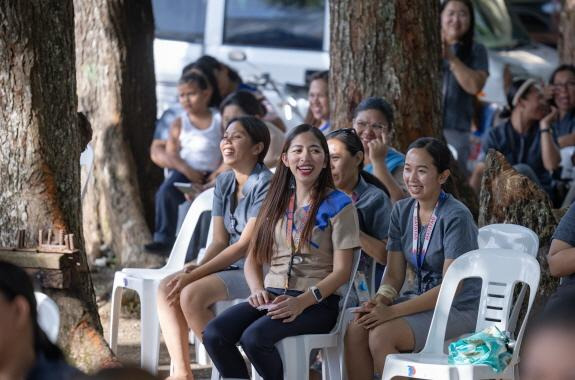
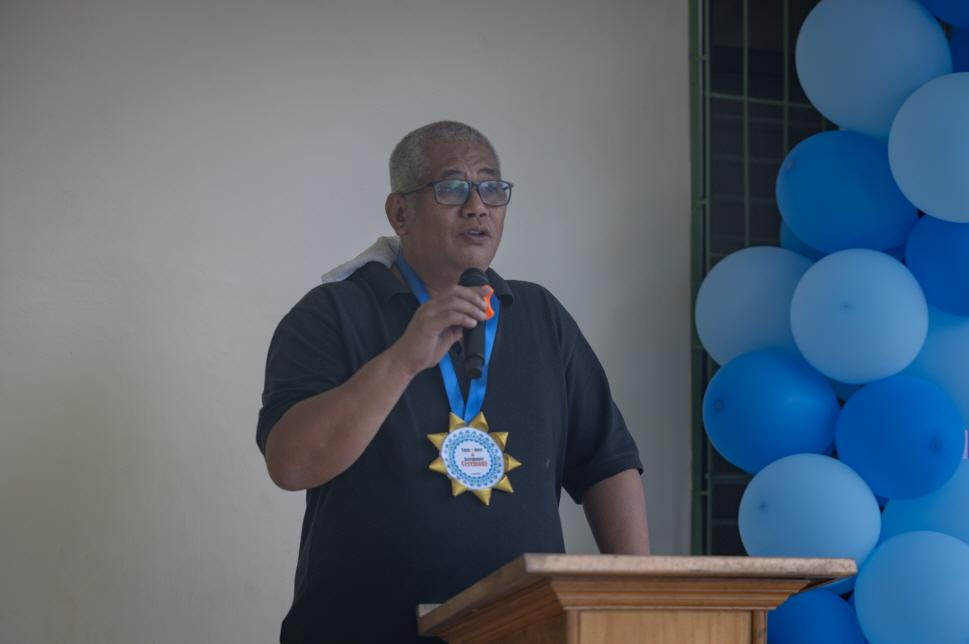
Following the congratulatory remarks, local officials delivered their remarks. The mayor expressed his gratitude, saying, “It is a great blessing to have an excellent partner like JTS working with our community. I hope this school will serve as a valuable educational foundation for the children and future generations for many years to come.”
The Superintendent of Education also remarked, “Compared to the previously poor learning conditions, today’s change is truly moving,” and added, “The Department of Education will take full responsibility to ensure these classrooms are properly managed.”
Finally, a representative of the school staff concluded the event, saying, “The school dedicated today is not just a set of classrooms, but a symbol of hope opening new possibilities for special education students.”
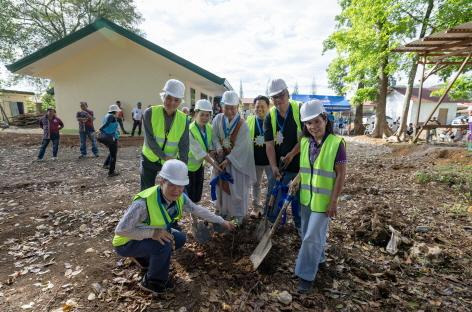
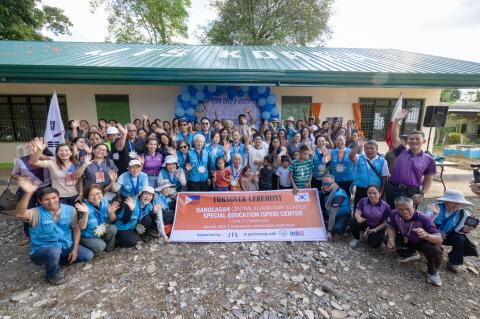
After the opening ceremony, a commemorative tree was planted in the schoolyard, and a group photo was taken in front of the new classrooms.
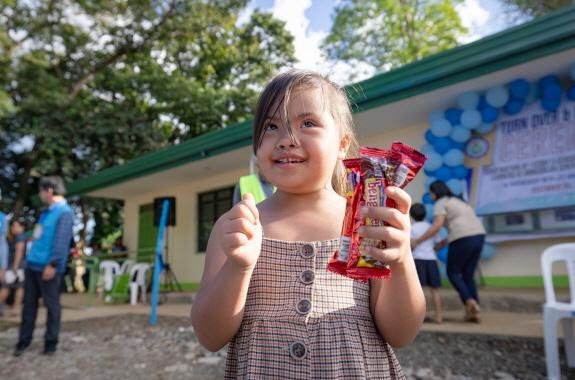
Venerable Pomnyun posed for photos with the students and distributed snacks, and the children responded with bright, joyful smiles.
Afterwards, the delegation toured the entire school, including classrooms attended by non-disabled students. While the exterior appeared worn, the interiors were neatly maintained and well cared for.
Principles and Efficiency: The Future Direction of JTS
At 6:30 p.m., the delegation gathered in the auditorium for a light dinner and watched a video showcasing JTS Philippines’ activities over the past year. Afterwards, Venerable Pomnyun spoke about the current challenges facing JTS and its future direction. He noted that the attitude of the Philippine government, the Department of Education, and local governments has changed significantly compared to the past. He positively highlighted the increased sense of responsibility for education, with the Department of Education taking the initiative to propose school construction and promising to dispatch teachers. Within this changing environment, JTS has shifted to a model where local governments lead school construction, enabling the construction of 10 schools last year and 15 schools this year.
However, he noted that as the scope of the projects has expanded, the workload for activists has increased, and concerns over staffing and employment have grown as well. Venerable Pomnyun made it clear that, since JTS is an organization where participants voluntarily engage in its activities, hiring staff to increase efficiency would not align with its fundamental principles. While they have tried to uphold these principles by having local governments cover labor costs or manage technical personnel, the growing scale of the projects has again presented difficult choices. He emphasized that “adhering to principles over efficiency is the foundation of JTS,” and that it is important to continue activities within manageable limits. He added that overcoming these limitations will require more voluntary participation and service from the public.
Finally, Venerable Pomnyun suggested that, in addition to school construction, there is a need to systematize disaster relief efforts to respond to the increasing frequency of natural disasters. He proposed continuing discussions with the delegation over the next few days on the future direction of JTS.