[Philippines] Inauguration Ceremonies for Pangalay-ayan School and Lugayaran School in Indigenous Villages
2026-01-20
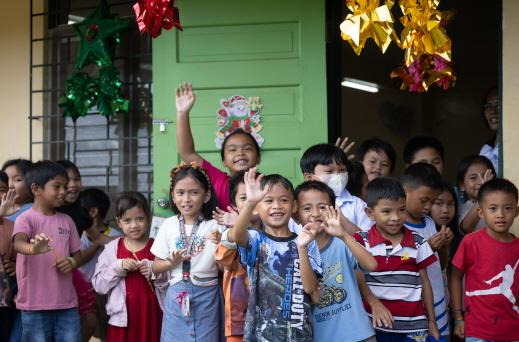
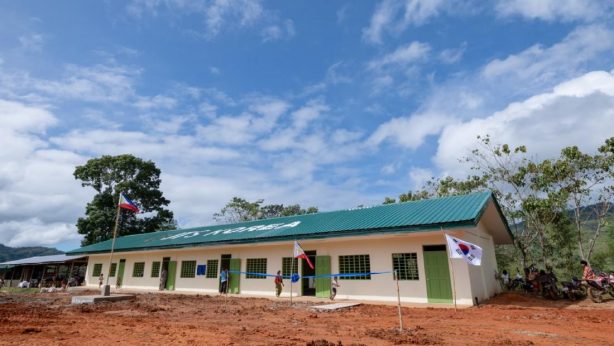
On December 10, 2025, inauguration ceremonies were held for Pangalay-ayan School and Lugayaran School in remote indigenous mountain villages in Kitaotao and San Fernando municipalities of Bukidnon Province, Philippines. The JTS delegation departed from Valencia at 5 a.m. and headed first to Pangalay-ayan village for the school opening ceremony.
A School Built Together Across Two Rivers
Pangalay-ayan village was a site personally visited by Venerable Pomnyun in March 2024. At the time, access to the area was extremely poor and securing a budget was difficult, making school construction a major challenge. The municipal government was also unable to provide sufficient funding for technical personnel. However, driven by the villagers’ earnest desire for education and Venerable Ponmyun’s promise, the school construction project moved forward. Later, Edwin, the Department of Education’s officer in charge of Indigenous education, persuaded the provincial government to secure funding for technical staff, allowing construction to finally begin in earnest.
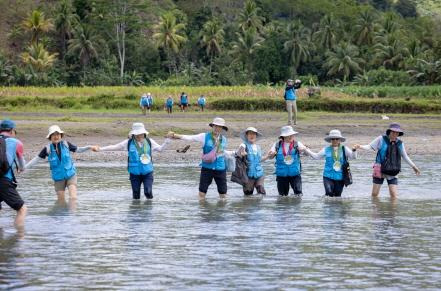
As expected, the construction process was not easy. To transport materials, workers had to cross two rivers multiple times, and it took about four months just to establish a reliable method of transportation. Nevertheless, villagers voluntarily participated in the construction, collected gravel and sand from the river and made bricks to build the school. Teachers, parents and the Datu (village leader) organized the residents, and through their day-and-night cooperation, the project was carried forward by the strength of the community.
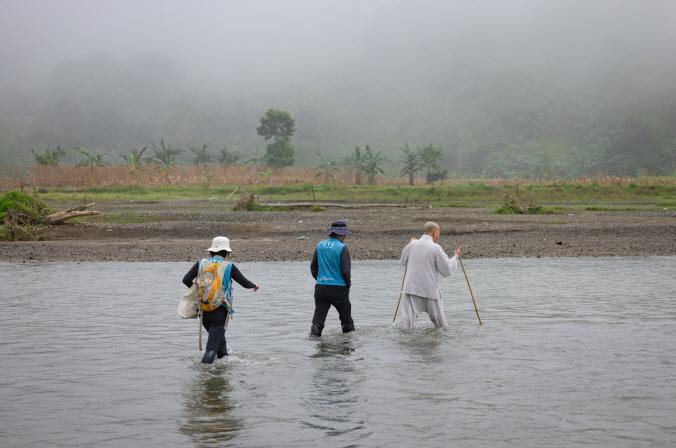
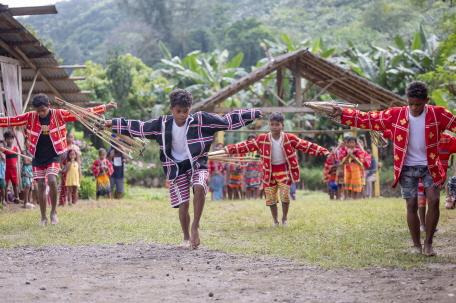
On the day of the inauguration, the delegation crossed the river and walked along mountain paths and streams for about an hour, arriving at the school around 7:30 a.m. Students dressed in traditional attire welcomed the visitors with dances, and the entire village was filled with a festive atmosphere.
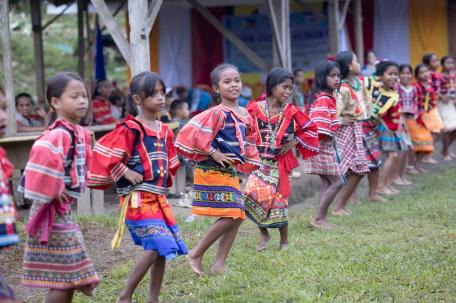
At 8 a.m., municipal officials arrived and the ceremony began with the ribbon-cutting.
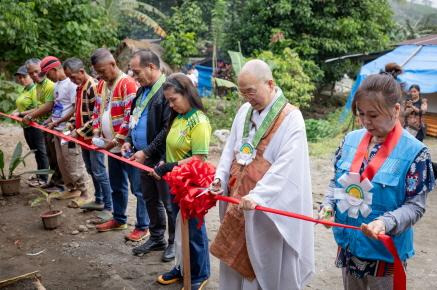
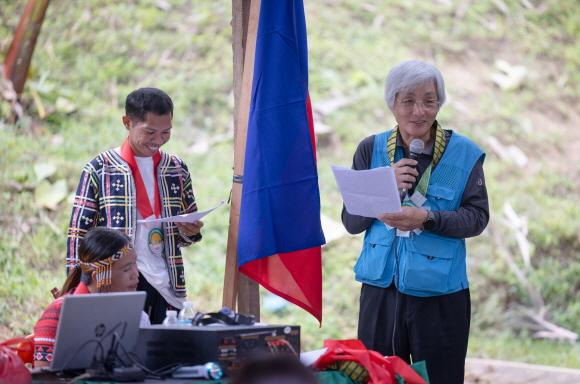
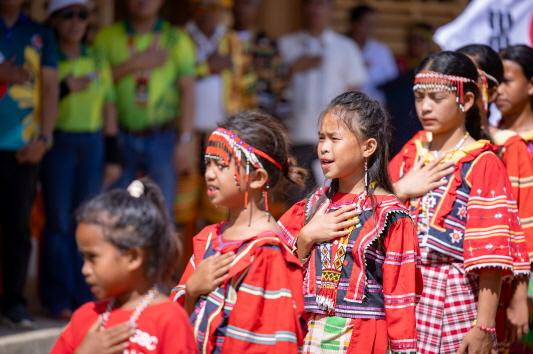
During the ceremony, the national anthems of the Philippines and the Republic of Korea were sung, followed by a welcoming address from the school principal and a progress report by Jae-guk Noh, representative of JTS Philippines. He reported that the school building—consisting of three classrooms, restrooms, and teachers’ housing—had been completed through the cooperation of local residents, the municipal government, the Department of Education, and JTS.
This was followed by a traditional dance performance by the students and ceremonies to present certificates, keys, and clocks. Words of appreciation were also extended to Department of Education officials, volunteers, and village leaders who contributed to the construction of the school.
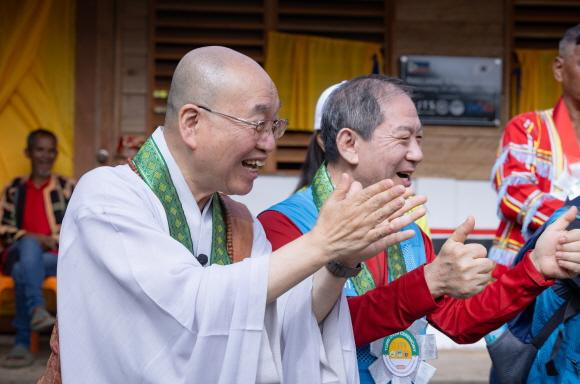
Next, Venerable Pomnyun began his congratulatory remarks, recalling his visit to the village for a site survey two years earlier.
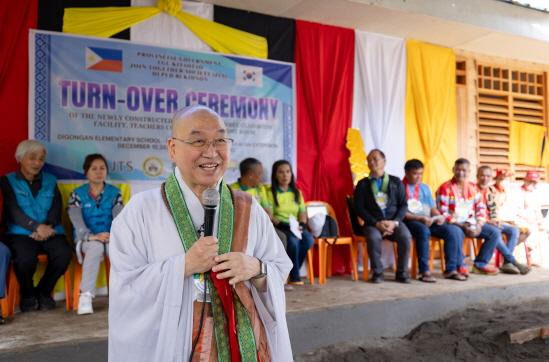
“It has already been two years since I visited this place. Do you remember what happened back then? At that time, the Datu brought a chicken for a welcoming ceremony and was about to cut its neck. I asked the Datu to spare the chicken’s life. The chicken that was saved that day has led us to this school we’re celebrating today.”
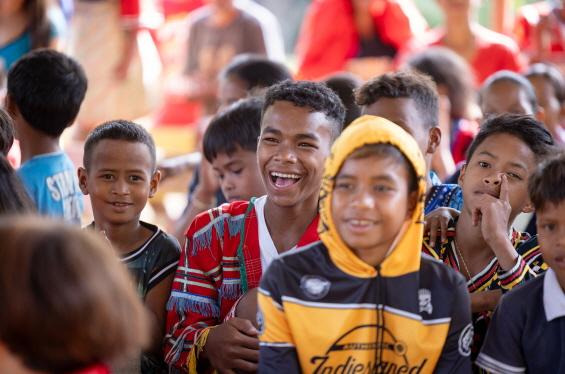
“At that time, I said, ‘Building a school here won’t be easy because transporting materials will be difficult. I wonder if the villagers will really be able to accomplish this.’ But all of you shouted in unison, ‘We can do it!’ And seeing you today, you have truly done it. You’ve worked so hard.
I want to thank everyone who participated in the school construction, and I hope that in the future, you will continue to create hope for yourselves just as you did today.
There were many challenges in completing this school. It was made possible through the support of JTS and the dedication of the villagers. In addition, for this project, the provincial government provided partial funding for technical staff. In particular, Edwin, the Department of Education officer in charge of Indigenous education, went to the provincial government, explained the project, and secured funding for the workers’ wages. Let us give Edwin a big round of applause.”
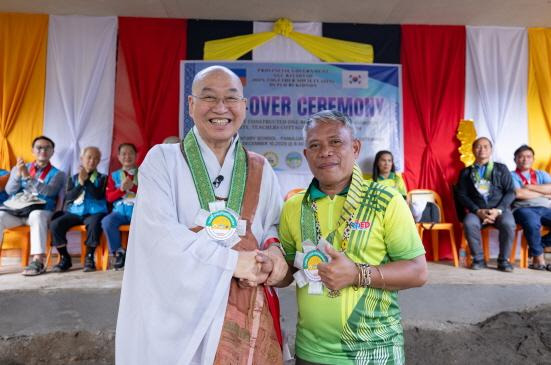
For such achievements to happen, there must be people who wholeheartedly step forward for the children. Edwin played a very significant role in the process of establishing numerous indigenous schools over the years. In addition, the completion of this school was made possible through the hard work of many activists, including JTS representatives. In particular, Ms. Ga-young Kim, who was in charge of this school, reportedly visited the site as many as ten times to oversee the construction. Truly, everyone’s efforts are greatly appreciated.
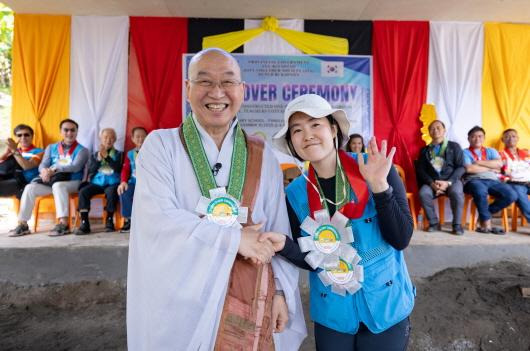
Above all, from the very first discussions about building this school, the local Datu was incredibly proactive and supportive. Many people came together to make today’s completion of this building possible, but the Datu’s role was especially significant. We sincerely thank you.
The reason parents, the education office, the provincial government, and JTS all collaborated to establish this school is simple: everyone shared the same goal—to do what is best for the children growing up in this community. We hope that the children will study diligently under the guidance of their teachers and grow into outstanding individuals.
Did you see the students dancing today? The reason they can dance so wonderfully is thanks to the four teachers who guide and support them so well. Please give the teachers a big round of applause.
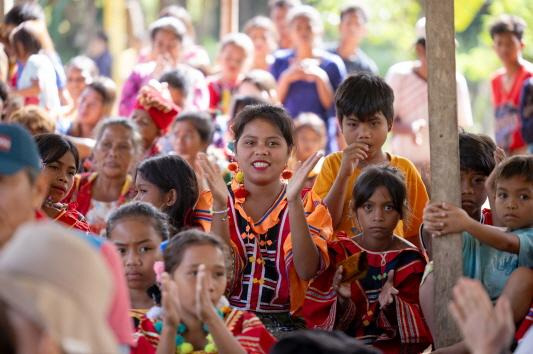
I also grew up in a rural area like this. If I hadn’t had the chance to receive an education, I might have spent my whole life there. It is because I had the opportunity to learn that I am able to stand here today.
That’s why I have a special request for the parents: of course, farm work is important, but please make sure your children attend school during class time. You will do that, won’t you?”
“YES!”
“But my father once scolded me, saying, ‘Will studying put food on the table or money in your pocket? Go work!’ So I had to work during the day and study in secret. Of course, that’s how I came to love learning. But you must ensure that your children can study freely, supporting them firmly from behind.
There are also two temporary buildings here. The JTS Philippines representative just promised me that these buildings will be converted into classrooms so that students can study safely.
Finally, there is one more thing I want to emphasize. Please make sure to preserve your tribe’s unique culture, traditional beliefs, and traditional clothing.”
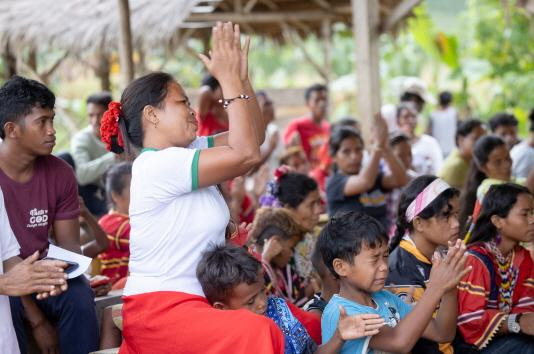
The Bukidnon Provincial Education Director expressed deep gratitude to JTS and Venerable Pomnyun for providing educational opportunities to indigenous children.
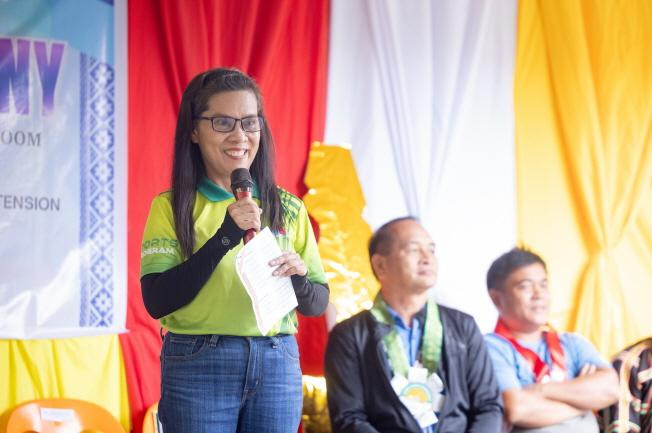
“This morning, when I arrived at the school, I discussed which grades would use the new classroom first with the four teachers. At first, I thought it would be nice for the sixth graders, who are about to graduate, to make good memories in this beautiful classroom, even if only for three months. On the other hand, there was also the opinion that the younger children—kindergarteners and first and second graders—should use the new classroom. It wasn’t easy to coordinate since each grade had different needs.
However, Venerable Pomnyun promised that all the other classrooms would be renovated as well, which solved all our concerns. I would like to take this opportunity to express my heartfelt gratitude.”
Breaking Down Barriers and Opening Children’s Futures
“We sincerely thank JTS and Venerable Pomnyun for personally visiting communities across Bukidnon Province in the Philippines, building 57 classrooms this year alone, and providing tremendous support to indigenous children who had long been marginalized in education. Distance often kept children from accessing education, but thanks to all of you who came all the way from Korea to this faraway place, even that distance no longer matters. Once again, we extend our heartfelt gratitude.”
Following this, remarks were made by the public school district supervisor, the governor’s secretary, a member of the provincial council, the barangay captain, and the local Datu.
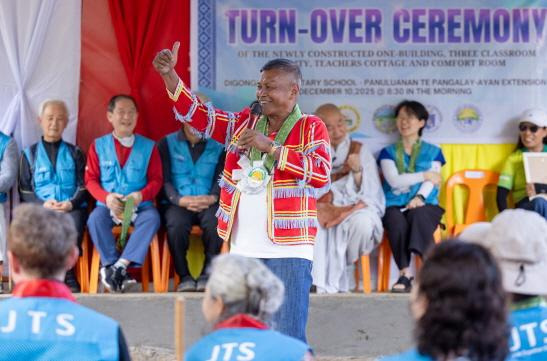
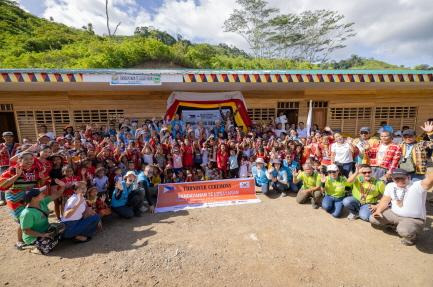
After the school opening ceremony, a commemorative tree planting, snack distribution, and group photos took place. The Bukidnon Provincial Education Office and local government also provided students with school supplies and daily necessities.
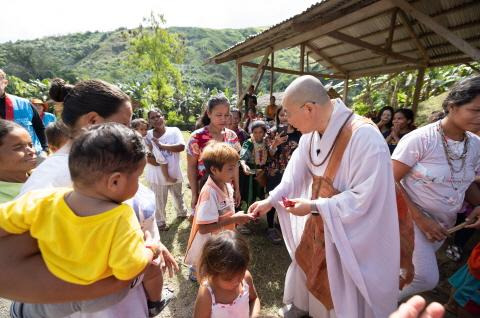
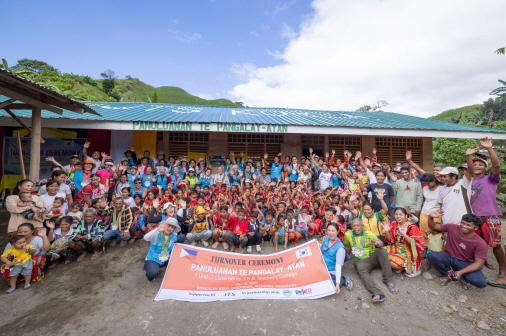
At 10:10 a.m., the visiting group departed the village amid the residents’ farewell. The journey was challenging, crossing mountains, streams, and rivers several times, but everyone completed it safely and moved on to the next destination. Leaving behind the school that had been completed through the community’s efforts, the visitors carried with them a deep sense of fulfillment and emotion.
A School Built on Tradition, Learning for the Present
By the time everyone had crossed the river, it was 11 a.m. The visiting group boarded the bus again and headed to the next inauguration site in Lugayaran Village. After about an hour and a half along paved roads, the route turned to unpaved roads, and the group had to disembark where the bus could no longer continue. Switching to trucks and four-wheel-drive vehicles, they traveled along a bumpy path for some time. Former Representative Won-joo Lee joked, “Just sitting still, I feel my stomach getting a workout,” bringing laughter to the group.
At 12 p.m., the newly built Lugayaran Elementary School appeared atop a low hill, and the visitors arrived at the school.
The classrooms, made of wood, were neatly arranged on a concrete-leveled floor, and toilets were properly installed beside the classrooms.
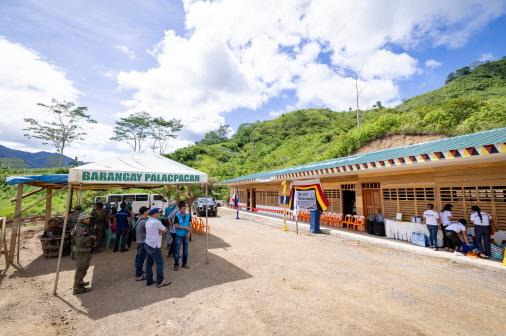
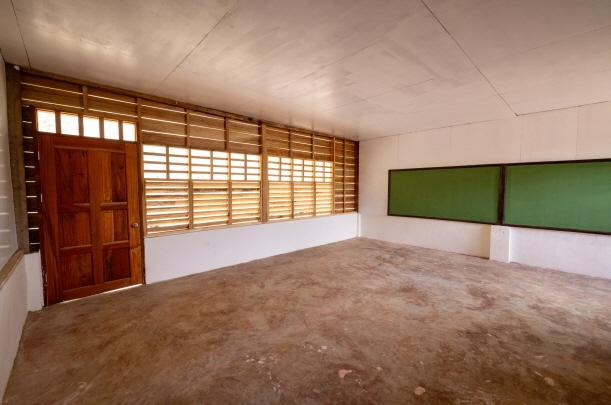
Due to the remote mountain village location, it is difficult for teachers to commute, so a teacher’s residence was also built on the premises.
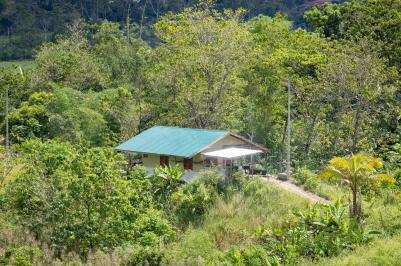
In front of the school, a wide open field stretched out. Observing the surroundings, Venerable Ponmyun asked a JTS local activist a question.
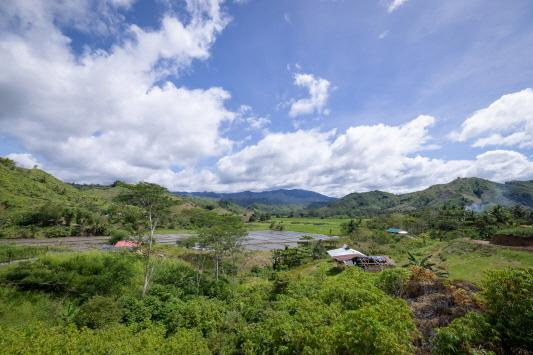
“With such a wide field here, why wasn’t there a school until now? Was this a conflict area?”
The activist explained that this area had been affected by the activities of the NPA (New People’s Army), and that a few wealthier farmers had taken control of the land, pushing many residents further into the mountains. In fact, soldiers were still stationed around the school to maintain security.
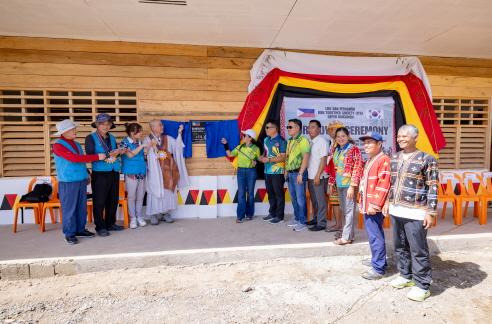
Following the ribbon-cutting and unveiling, the Philippine and Korean national anthems were sung. After the barangay captain’s welcome remarks, JTS Philippines Representative Jae-guk Noh gave a progress report.
Representative Jae-guk Noh explained that during JTS’s first visit in September 2024, the children were attending classes in temporary spaces such as the Sitio hall, warehouses, front yards of houses, and in front of the church. With approval from the Department of Education and staffing support from the San Fernando municipal office, construction was able to begin in February 2025. The municipal office even built a new road leading to the school.
Despite frequent rain and typhoons making material transport difficult, the school—consisting of four classrooms, toilets, and a teacher’s residence—was completed thanks to teachers and village leaders organizing the community to work tirelessly day and night.
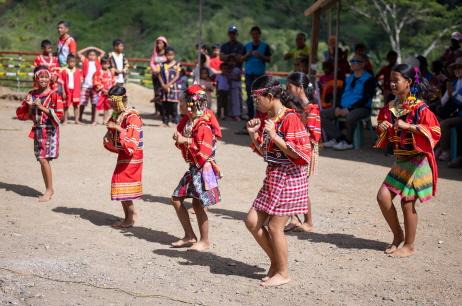
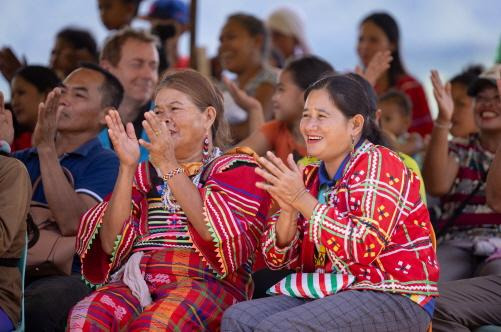
Next, the students, dressed in traditional attire, performed a celebratory dance, and the visiting group responded with enthusiastic applause. After the presentation of certificates, keys, and clocks, Venerable Pomnyun stepped forward to deliver a congratulatory address.
“Today, I am truly delighted to attend the inauguration of Lugayaran Elementary School. Parents and students, aren’t you happy that the new school has been completed?”
“YES!”
“Until now, Lugayaran Elementary School operated as a temporary school, but with this well-built school building, it has now become an officially recognized school. Seeing the children perform the tribe’s traditional dances so enthusiastically during today’s inauguration filled my heart with joy as well.
JTS considers helping children receive the education they need on time to be its most important mission. Through education, we can learn from the experiences and knowledge accumulated by humanity over ten thousand years. By inheriting the legacy of human history through learning, we live not just as a biological species, but as humans in the fullest sense.
However, for children living in remote areas with poor transportation, gaining access to education is often very difficult. That is why JTS’s primary goal is to ensure that not a single child is left out of education.”
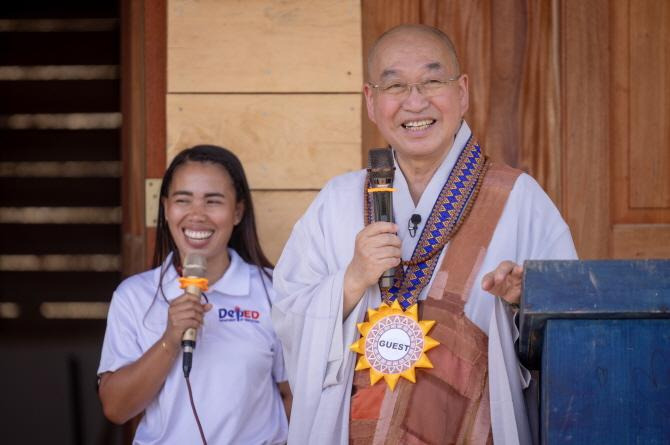
“There are nearly seventy children in this village. These children have the right to receive a good education. Understanding this, the municipal office took an interest and sent skilled technicians to assist with the school construction. I extend my deep gratitude to the municipal mayor, the barangay captain, village leaders, and all the residents who contributed to building this school.
No matter how excellent a building is, education cannot take place without teachers. Today, the Department of Education also participated directly, with the Education Director attending the inauguration and assigning capable teachers. You saw the children’s traditional dance performance, didn’t you? The reason the children can grow up so well is thanks to the careful guidance of their teachers.”
A Place Where Tradition and Learning Grow Together
“Now, what the parents must do is consistently send their children to school. No matter how busy household chores may be, please make sure your children attend school. Additionally, we hope that teachers and village residents will work together to help children preserve their tribe’s traditional culture—its dances, songs, and clothing—so that it is not forgotten.
The advantage of formal schooling is that children can receive systematic education. However, in the process, the tribe’s identity, traditional culture, and beliefs may be neglected. We hope you will also pay attention to preventing such side effects.
We are grateful to everyone who contributed to the construction of Lugayaran Elementary School. And to the village residents, students, and teachers, we sincerely congratulate you on the completion of the school.”
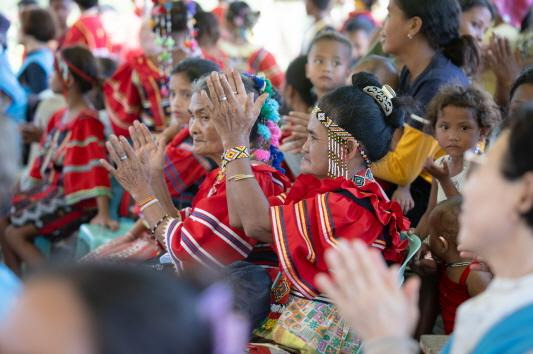
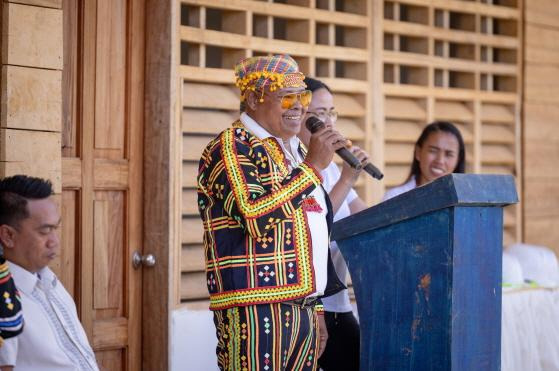
Next, the municipal mayor’s chief of staff, the Bukidnon Provincial Education Director, the district supervisor, and the Datu each delivered congratulatory remarks, expressing their gratitude.
Accompanying the JTS delegation throughout all the inauguration activities, the Bukidnon Provincial Education Director shared the following observations.
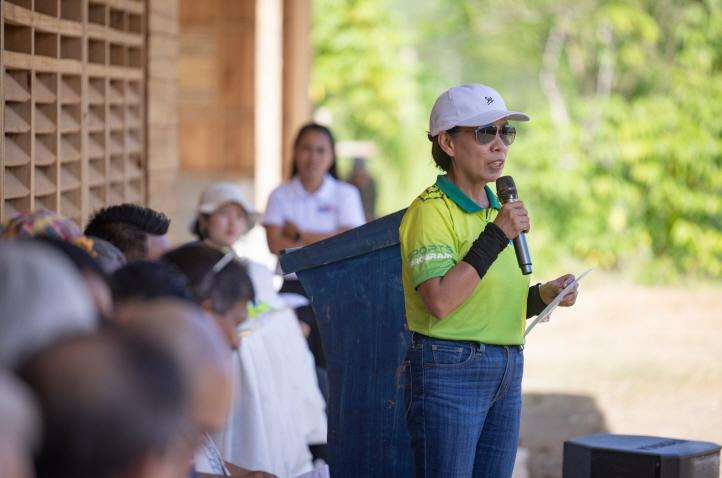
“The journey to this place was truly beautiful. This area is not only rich in natural beauty but also in the hearts of its people. The children, teachers, parents, and the local community all deeply understand that ‘raising a child is everyone’s responsibility.’ Included in this ‘everyone’ are the JTS members who traveled all the way from across the mountains and clouds to the Philippines to be here with us. We sincerely thank you.”
What JTS Built Is Not Just a Building, but the Children’s Future
Venerable Pomnyun said that it was thanks to receiving an education in his childhood that he is able to engage in international activities today. We hope that the children of Lugayaran will also receive excellent education at this school and, in the future, be able to explore freely around Korea and the world.
The Department of Education is also working to build more schools in mountainous regions. However, considering the efforts of JTS, who came all the way from Korea to this distant place, our own challenges seem incomparable. Generosity knows no borders. Kindness has no limits. If we teach children this spirit of generosity and solidarity, they will one day become even greater leaders than we are. This school is not merely a building—it is the future of the children in this region. We extend our deep gratitude to JTS and everyone who helped build such a beautiful school.”
The Datu also expressed deep emotion, saying, “The classroom I dreamed of since childhood has finally come into being.”
Following the ceremony, a commemorative tree planting took place in the school yard, snacks were distributed to the children, and everyone took a group photo to mark the occasion.
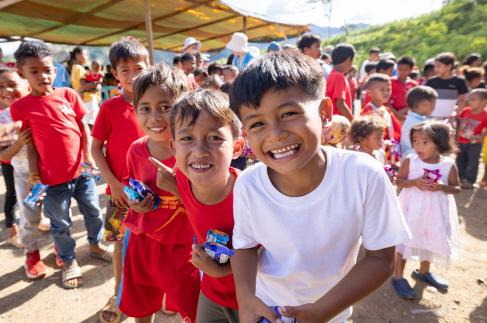
Afterward, inside the classroom, the villagers hosted a snack time with corn, bananas, sweet potatoes, and cassava.
At 3:00 p.m., the visiting group departed from Lugayaran School, concluding the day’s activities.