[Sri Lanka] Field Visit and Support in the Southern Region
2026-04-28
On March 11, the third day of the Sri Lanka visit, the team traveled to Passara in Uva Province in the southern region. The team inspected bridges and drainage channels damaged by the cyclone and delivered rice to 500 households affected by the flooding.
Surveying the Affected Areas
Departing their accommodations at 6:00 a.m., the team continued their journey through the winding mountain roads of Uva Province, with many uphill and downhill stretches, after passing through the flatlands.
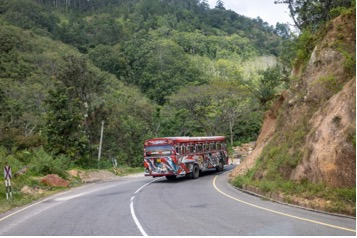
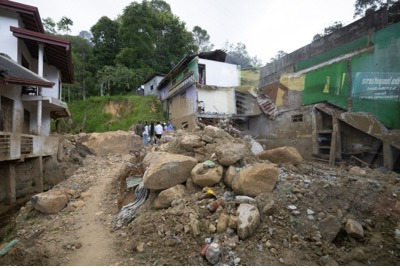
Piles of rocks and mud washed down from the floods were scattered along the road. Excavators were clearing the debris, barely keeping the traffic moving.

With the national roads still awaiting repair, the smaller roads leading to the villages appeared to be completely neglected.
After traveling through the mountain roads for more than four hours, the team arrived at a temple in the Passara area at 10:45 a.m., where the distribution of relief supplies was scheduled to take place that day.
A request had been made to repair a bridge in the village that had been washed away by the cyclone, so the team first inspected the site before beginning the distribution.
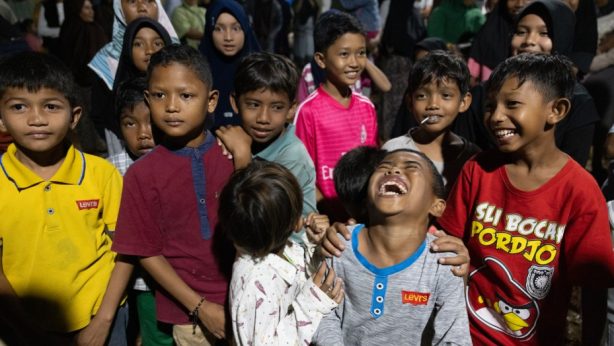
Because large vehicles could not access the area, the JTS volunteers continued on foot. Seeing them approach, children from a nearby kindergarten ran out to greet them.
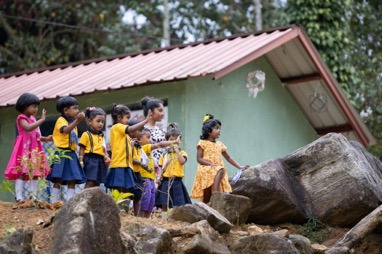
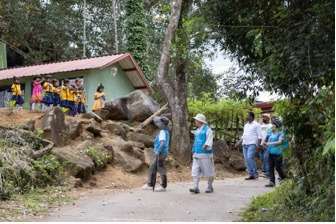
At 11:00 a.m., the team arrived at the home of a resident in Madugastalawa Village. The villagers had prepared refreshments and were waiting to welcome them.

When Venerable Pomnyun asked the villagers about the difficulties they were facing, the village representative began to share their concerns.

“Cyclone Deetwa struck this village three months ago. Around 50 people died across the Badulla District, and this village also suffered severe damage. The cyclone destroyed the bridge, collapsed the irrigation channels, and damaged the roads.”
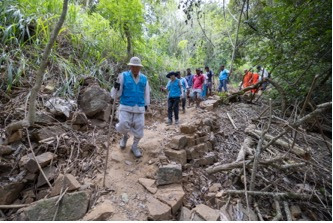
The villagers requested repairs to the collapsed bridge and damaged irrigation channels. The JTS volunteers then headed to the site to assess the extent of the damage.
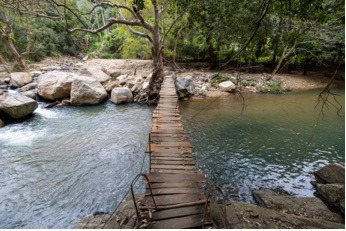
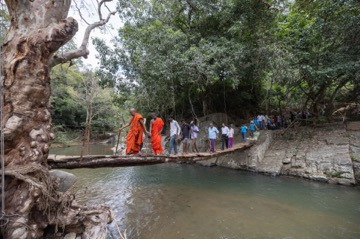
The team arrived at a temporary suspension bridge made of wooden planks laid over logs. Originally, this site had a cable bridge built in 1951. Measuring 110 feet long (about 33 meters) and 3 feet wide (about 1 meter), it was sturdy enough for both pedestrians and motorcycles to cross. However, it was completely destroyed by the cyclone.
On either side of the bridge are five villages, home to approximately 800 households. Children must cross the river to get to school, and residents must use the bridge to reach hospitals and other essential services.
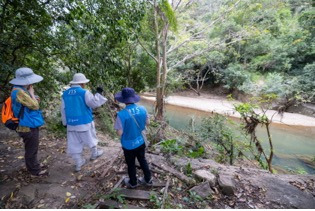
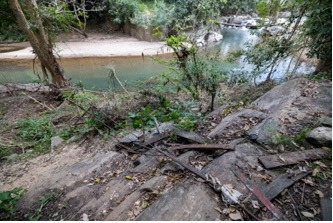
After crossing the temporary bridge and walking a short distance uphill, the team reached the remains of the cable bridge that had been destroyed by the cyclone. They then climbed down to the river to examine the water flow and the width of the channel before walking along the irrigation canal to assess the damage.
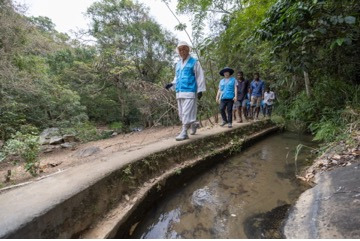
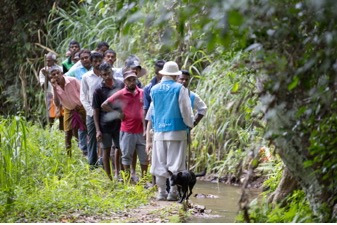
The irrigation canal that ran along the mountainside had collapsed in several places, with visible signs of temporary repairs. Soil had repeatedly washed into the canal, blocking the flow of water and causing it to overflow, which in turn eroded and damaged the embankments.
“The irrigation canal has failed here. If it is left unrepaired, the soil will continue to erode, and the damage will eventually become much more severe. It should be repaired with concrete now to prevent further deterioration.”
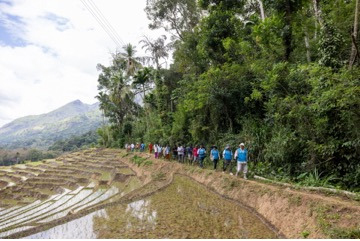
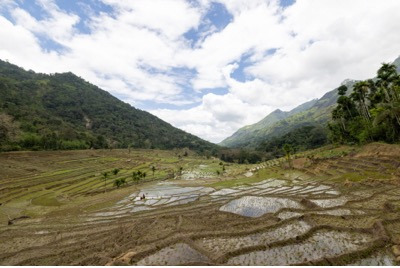
After climbing a gentle slope, the view opened to reveal lush terraced rice fields cascading across the mountainside. The villagers explained that about 90 households depend on this single irrigation canal for their farming.
By the time the team reached a large bodhi tree beyond the terraced fields, 45 minutes had passed since they began the site inspection. Everyone was drenched in sweat. Gathering in the shade of the bodhi tree, the JTS volunteers and the villagers continued their discussion.
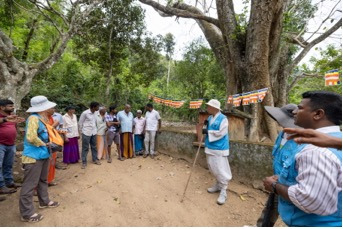
The villagers said they hoped for a bridge wide enough for tuk-tuks (three-wheeled motorized vehicles) to cross. In response, Venerable Pomnyun asked whether they had first requested assistance from the government. The village representative explained that they had been asking the government to repair the bridge even before the cyclone struck, but had never received a response.
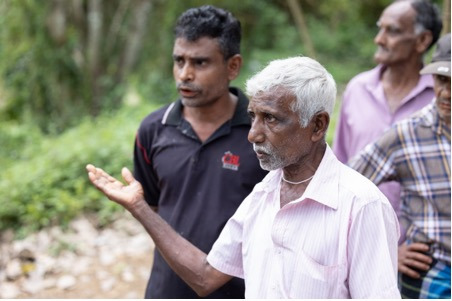
Venerable Pomnyun asked whether there were people in the village with the technical skills to carry out the project. The villagers explained that a local technician from the village, together with Sampath, a Sri Lanka JTS volunteer who works as a government engineer, would be able to provide the necessary technical support.
“That’s excellent. In that case, the villagers can provide the labor, JTS can supply the construction materials, and the government can provide the technical expertise. The three parties can work together on this project.”
Detailed discussions also continued on how to repair the irrigation canal.
“Rather than repairing only the sections where water is currently leaking, it would be better to reinforce all the areas that appear vulnerable while we’re here. Once a canal collapses, the repair becomes a much larger project. Preventive repairs, however, are relatively simple. The labor, though, should be provided by the villagers. JTS stands for Join Together Society. It doesn’t mean simply providing aid—it means working together by combining our efforts.”
“Yes, we will do that.”
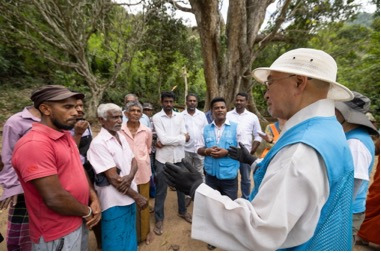
The discussion concluded with an agreement that the village would prepare and submit cost estimates and project proposals for each of the proposed recovery projects. Afterward, the team climbed the mountain road again to inspect additional sections that required road repairs. They walked the route on foot to identify the areas in need of restoration before returning to the collapsed bridge.
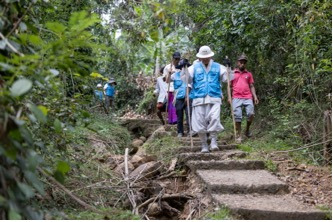

During the inspection, the team identified a critical issue. Even if the bridge were widened, tuk-tuks would still have difficulty climbing the steep slope on the opposite side. The villagers explained that this problem could be resolved by improving the access road.
After completing the site inspection, the team returned to the village for lunch, at 1:20 p.m. At 1:50 p.m., they headed to the temple, where the relief supplies were to be distributed.
Relief Distribution for 500 Households
When the team arrived at the temple, local JTS volunteers and village volunteers were busy preparing for the distribution under the scorching sun.
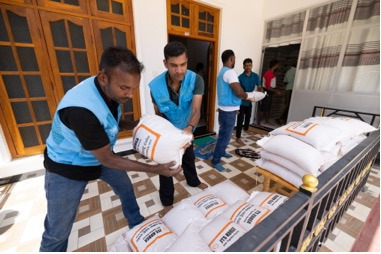
Before beginning the distribution, the team reviewed the flow of recipients. Since the narrow entrance was expected to cause congestion, they made an on-the-spot adjustment by separating the entry and exit routes and organizing recipients into a single line. As a result, the distribution proceeded in a much more orderly and stable manner.
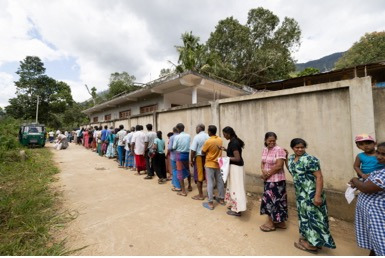
At 2:00 p.m., the distribution began.
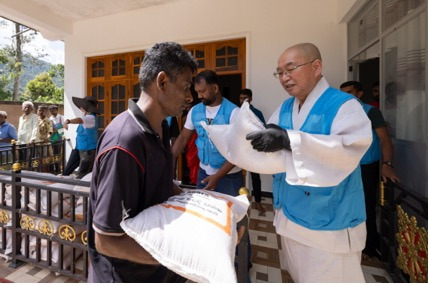
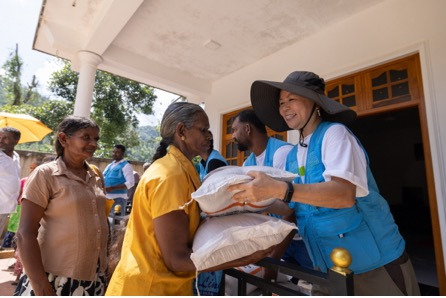
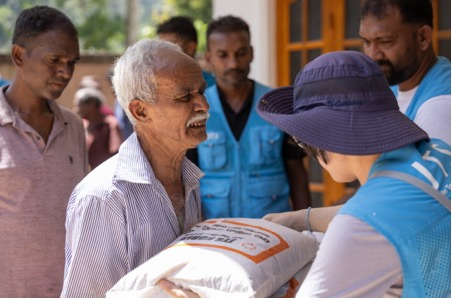
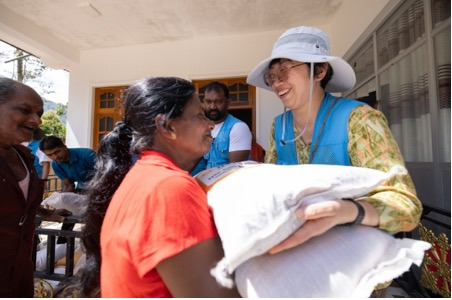
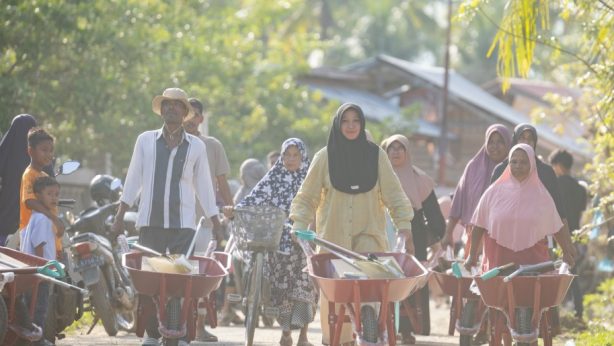
Each household received two 10 kg bags of rice. Bright smiles spread across the faces of the residents as they received the rice. Elderly women carried the bags on their heads, mothers took turns carrying them to keep their balance, and young people shouldered the heavy sacks as they walked home with determination. The heavier the bags seemed, the brighter their smiles became.
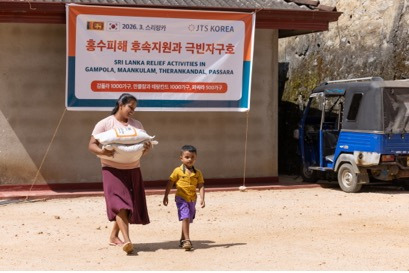

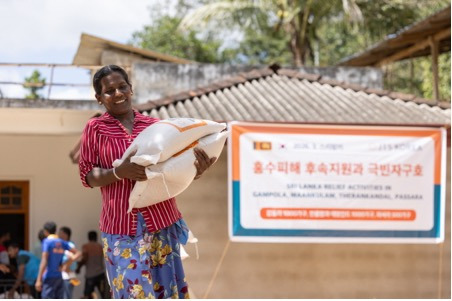
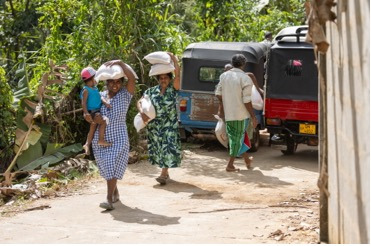
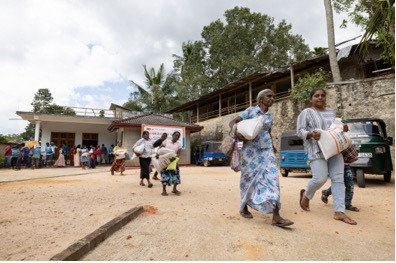
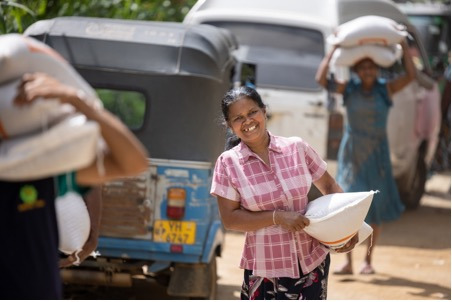
The entire distribution was completed within one hour.
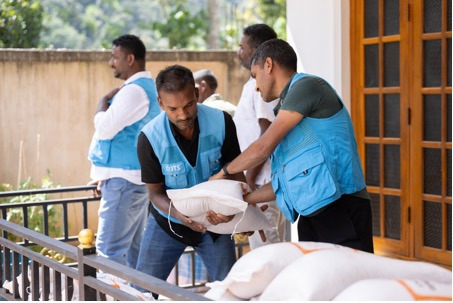
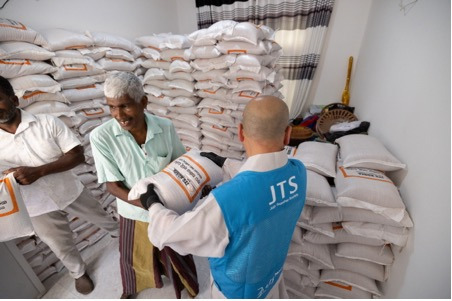
The day’s activities concluded with the presentation of prayer beads as gifts to the volunteers who had completed their service and were returning home.
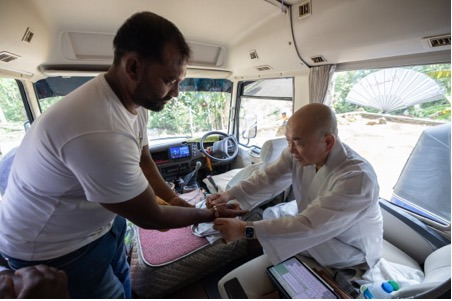
Through this effort, relief supplies were delivered to 500 households affected by the cyclone in the Passara area. Based on the field assessment, JTS also finalized plans for collaboration on the restoration of the collapsed bridge and damaged irrigation canals.