[Sri Lanka] Site Visit to Northern Region and Relief Support
April 28, 2026
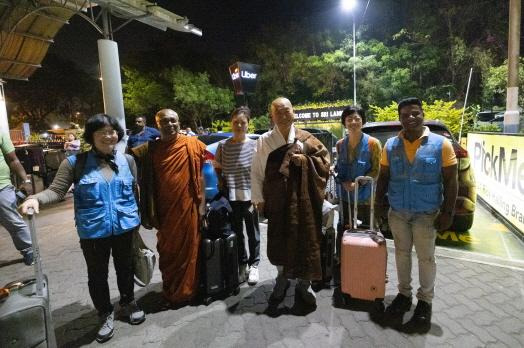
On March 9, 2026, Venerable Pomnyun, Jina Park (President), and Youngsook Park (Secretary General) departed for Sri Lanka to provide assistance to communities severely affected by flooding. The JTS volunteers left Korea early in the morning and arrived at Bandaranaike International Airport in Colombo at around 6:30 p.m. that evening.
At the airport, they were welcomed by JTS volunteer Yoonmi Kim, who had already arrived, local volunteer Namal, and Venerable Dhammananda, who has been providing dedicated support for JTS Sri Lanka’s humanitarian projects.
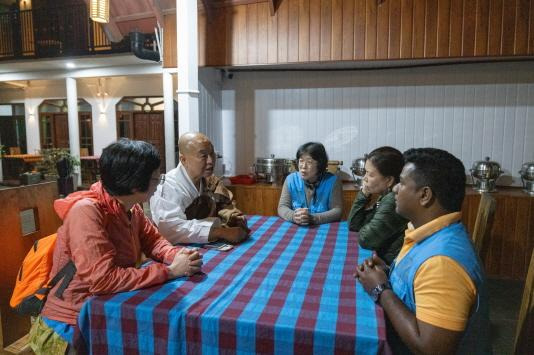
After arriving at their accommodations late that night, the team carefully reviewed the relief schedule and travel itinerary, bringing the first day’s long journey to a close.
Visits to Schools and Villages
On March 10, the second day of the visit, the team began its relief activities in earnest by visiting schools and villages in Mankulam and Therankanda, near Jaffna in northern Sri Lanka. The team also provided assistance to households living in extreme poverty.
Throughout the day’s visit, Kelom, who is fluent in Korean, assisted the team by serving as both guide and interpreter.
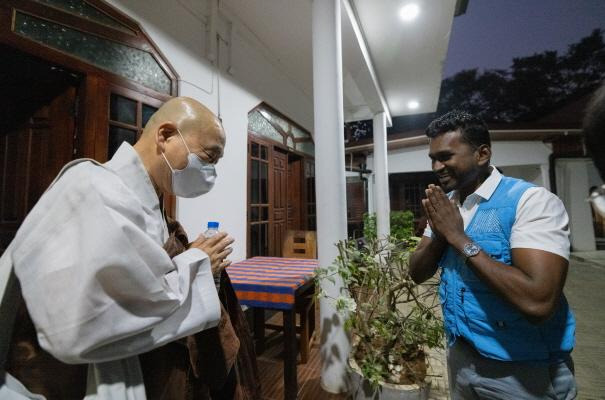
The JTS team departed their accommodations at 6:00 a.m. and traveled for three and a half hours by car, arriving at Vannivilankulam School in Mankulam at approximately 9:30 a.m.
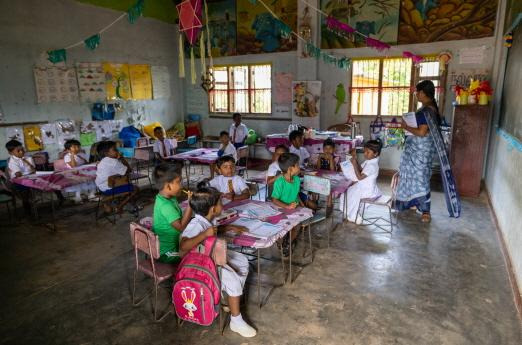
This government-run school has approximately 200 students enrolled from grades 1 through 11. It is located in a community where Tamil families, displaced from southern Sri Lanka during the civil war that began in 1983, later resettled. The principal is also one of those who was displaced by the conflict.
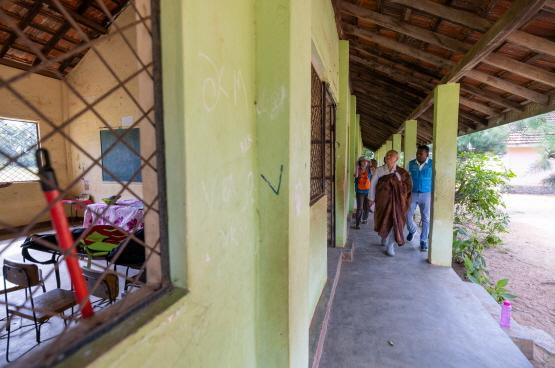
As the team walked through the school, they found clear signs of years of wear and neglect. Many classroom window frames were damaged, and the wire mesh that had been installed in place of glass windows was torn and left unrepaired. Most classrooms had no ceiling fans, and of the few that remained, only about three were still functioning properly.
According to the school administration, the school has received little to no assistance from outside organizations over the past 25 years. Although the school has repeatedly requested support from the government, it has consistently been told that there is no budget available.
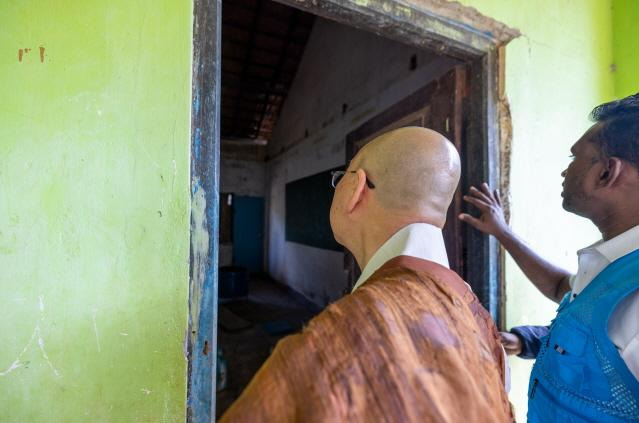
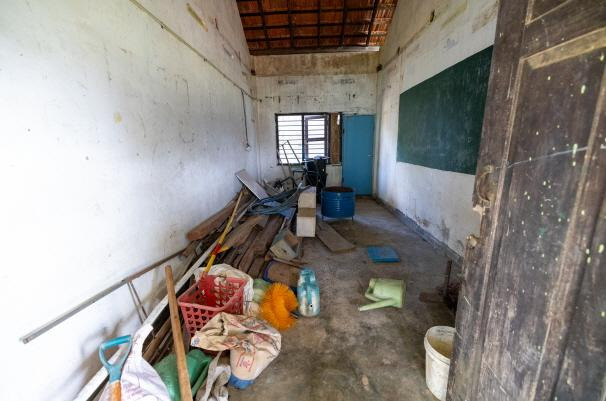
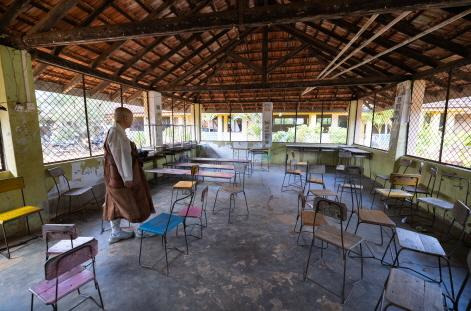
The team began by taking a close look at the school’s restroom facilities. They inspected the toilets, checked whether the water supply was functioning, and tested each faucet one by one. Through this careful assessment, they identified the repairs and improvements that required the most urgent attention.

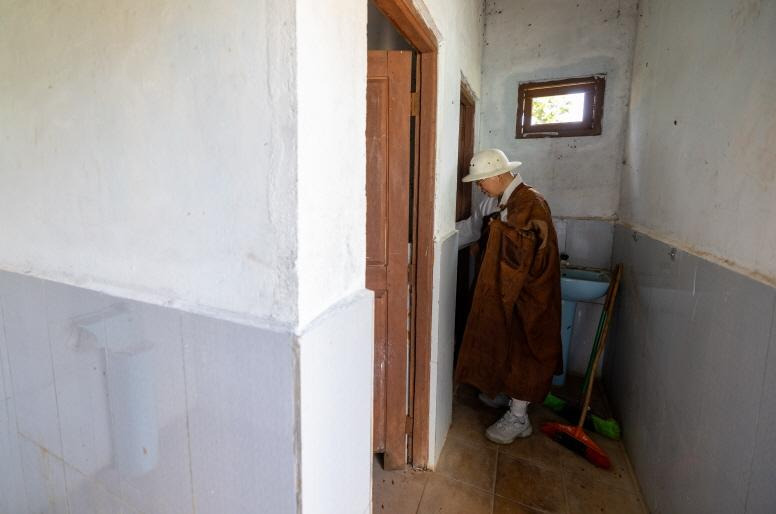
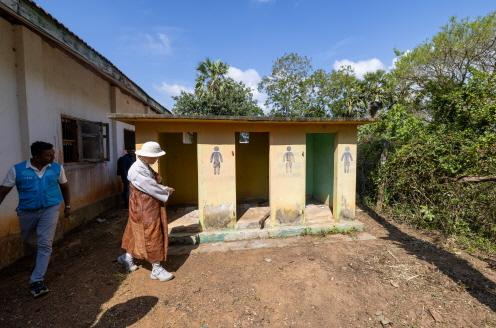
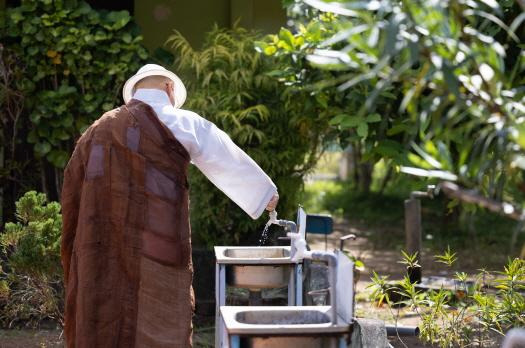
“The most urgent need appears to be the restrooms. If there are 200 students, about half of them are girls. Yet most of the toilets are unusable, and they have to rely on just these two stalls. Imagine how difficult that must be. Because there are so few functioning toilets, students end up relieving themselves wherever they can, so there seems to be little awareness of proper sanitation. Schools need to teach students to use clean, hygienic restrooms, but that can only happen if the restrooms are repaired first.”
School officials requested assistance with repairing the windows and electrical wiring. Based on its on-site assessment, the JTS team discussed support priorities, carefully weighing the urgency and necessity of each need.
As they continued inspecting the campus together, they reviewed each item requiring attention, including damaged electrical wiring, broken windows, and deteriorated restroom facilities. Venerable Pomnyun emphasized that it was important to distinguish between facilities that were simply old and those that posed an immediate safety risk.
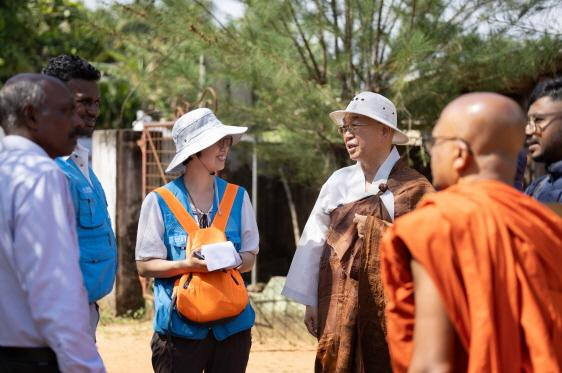
“From what I’ve seen, these conditions are difficult, but they are not the worst. In refugee camps in Myanmar, many children don’t even have classrooms—they attend classes in tents. Even so, the exposed electrical wiring, which could endanger the children, and the restrooms clearly need to be repaired. Let’s finish inspecting all the sites before deciding how we should provide support.”
The team then traveled to their second destination, M. Ampalpuram Tamil Vidyalayam in Babunikulam, to continue their field assessment.
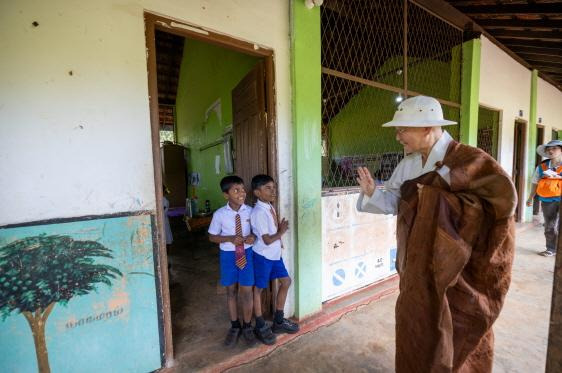
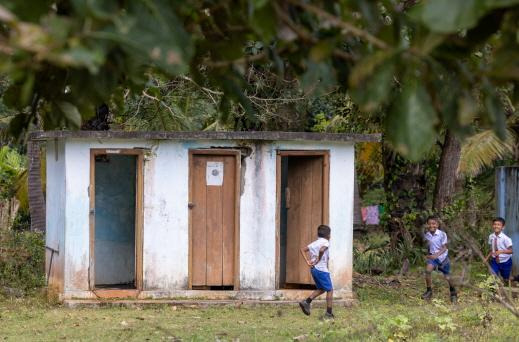
This school was a small institution with 47 students enrolled from Grades 1 through 5. It had five classrooms, and there were only two restrooms in total, shared between teachers and students.
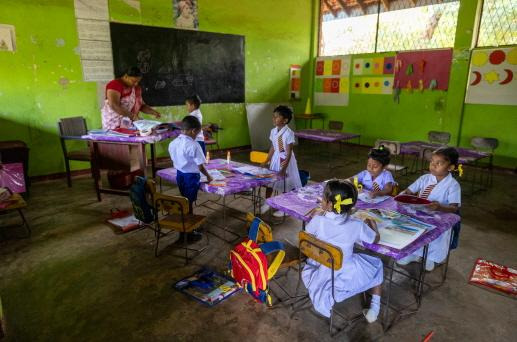
School officials also requested the installation of a water purifier because the groundwater contains a high level of lime deposits. However, after inspecting the site, the team determined that simply installing a water purifier would not provide a fundamental solution, as the filters would require frequent replacement.
Instead, the restroom conditions appeared to be a much more urgent issue, and it seemed necessary to either repair the existing facilities or construct new ones. The doors of the current restrooms were also broken, forcing students to hold the doors for one another when using the facilities. The lack of teacher accommodations was another challenge affecting the school’s operations.
The team then visited a nearby water purification facility to assess the local drinking water situation.
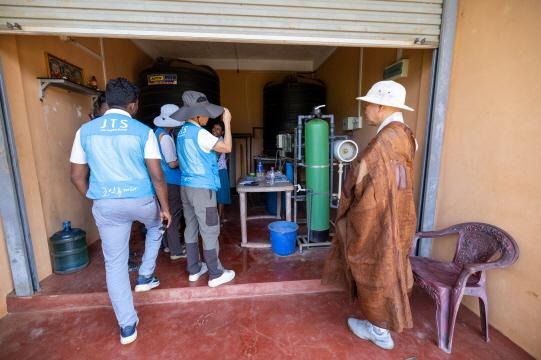
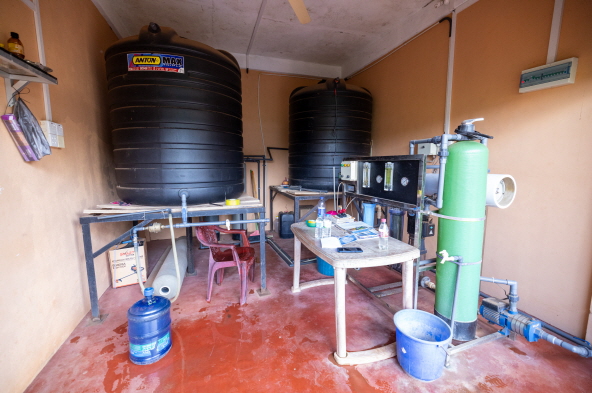
The facility was installed in 2021, and the filters were replaced every 15 days.
It had two water tanks with a capacity of approximately 2 tons each. Local residents purchased water from the facility at a rate of 100 rupees for 20 liters. On-site staff explained that around 350 households were using the facility and that its daily production capacity was approximately 500 to 700 liters, although the exact figures appeared to require further verification. The fact that residents from neighboring villages without their own water purification facilities were also relying on this facility highlighted that access to safe drinking water was not just a challenge for a single village, but a broader regional issue.
After inspecting the water purification facility, Venerable Pomnyun emphasized the seriousness of the water issue:
“In Sri Lanka, many people become ill because of water-related problems. In reality, every village needs a water purification system.”
At 11:05 a.m., the team arrived at GTMS School in Therankanda. In front of the school gate, students lined up to welcome the JTS volunteers, presenting them with flowers and applauding as they arrived.
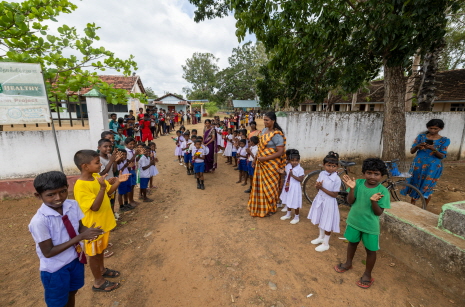
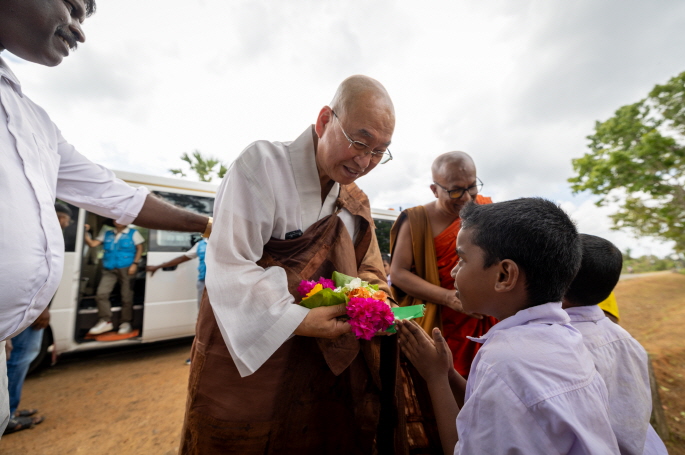
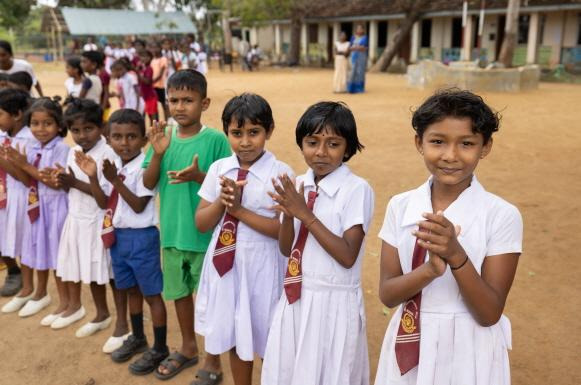
The school had 220 students from Grades 1 through 11 and 20 teachers. Most of the students were reportedly children of families displaced by the war.
As the team toured the school, they listened to various requests and concerns. The dining hall used for school meals had no doors, allowing monkeys and dogs to enter and take away the children’s food. Wild animals such as wild boars and elephants also entered the area around the playground, creating a need for fencing. In addition, during heavy rains, water overflowed from behind the school and near the entrance gate, flooding the school grounds.
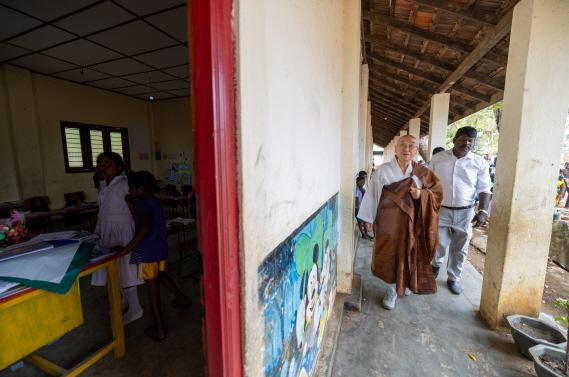
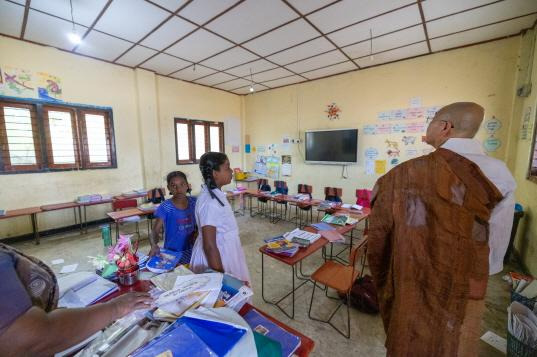
The team went to the front gate and carefully examined the direction of the rainwater flow and the elevation of the drainage channels. The school requested that the entire area in front of the gate be converted into a concrete drainage channel. However, Venerable Pomnyun suggested a more practical approach that could achieve the necessary results at a lower cost.
“Building a concrete channel across the entire area is something the government should do. It is not something JTS should take on.”
He explained that a more effective solution would be to build cement walls along the drainage channels on both sides of the gate, slightly lower the ground level at the entrance, and cover the area with wire mesh to prevent rainwater from flowing directly into the school grounds. He emphasized that only the sections that truly required reinforcement should be improved, while the remaining areas should be left open to allow the natural flow of water.
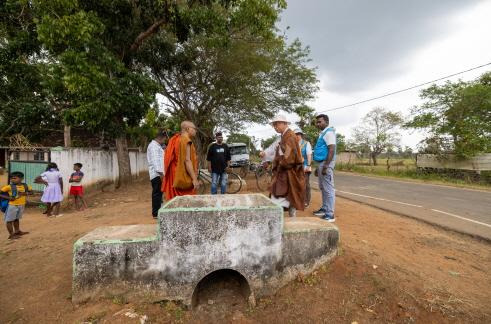
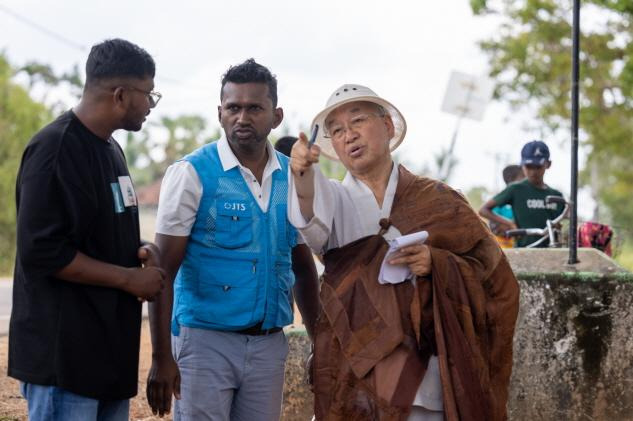
“We will dig down about one foot here and cover it with a metal grate. Once the ditch covered with a metal grate is in place, the water will not flow into the school grounds but will instead be directed into the drainage channel.”
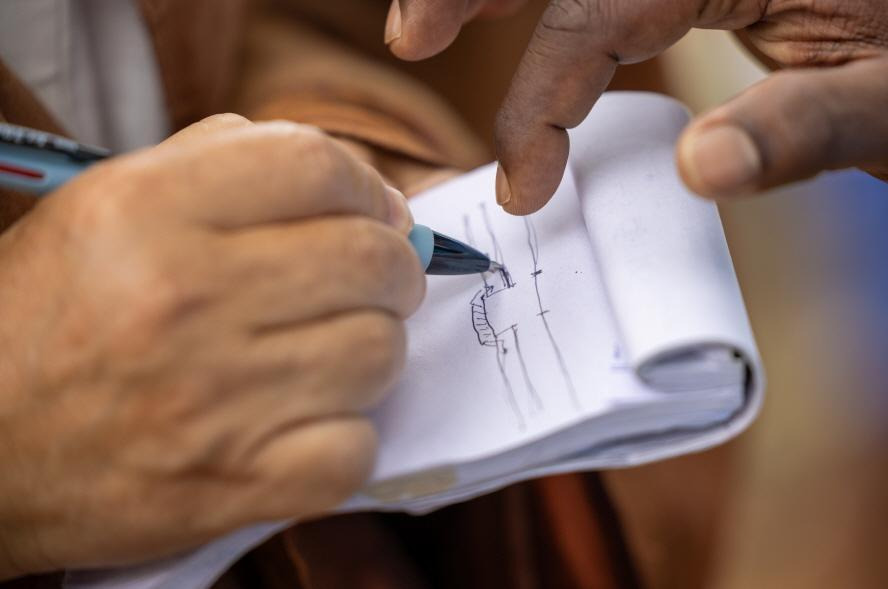
As JTS follows the principle of encouraging participation from local residents, the team asked whether the community could carry out the work if JTS provided the necessary materials. The school confirmed that local residents would be able to participate.
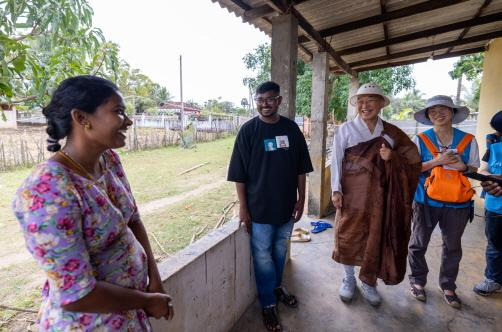
At this school, free meals were provided for students from Grades 1 through 5, and a single staff member was responsible for preparing meals for a large number of students. Venerable Pomnyun greeted the person in charge of the meal program and expressed his appreciation and concern.
“It must be very difficult for one person to prepare meals for 80 people. Thank you for your hard work.”
Distribution of Relief Supplies to 1,000 Households
After lunch, the team moved to the school where the distribution of relief supplies was scheduled to take place at 1:50 p.m. They planned to begin the distribution at 2:00 p.m., timed to coincide with the end of the students’ classes.
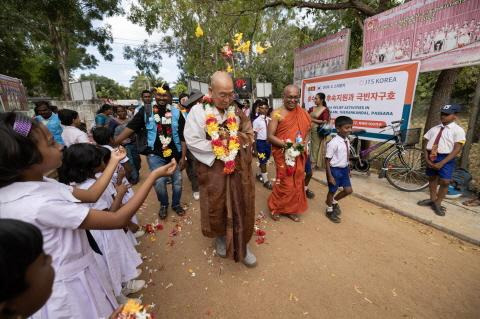
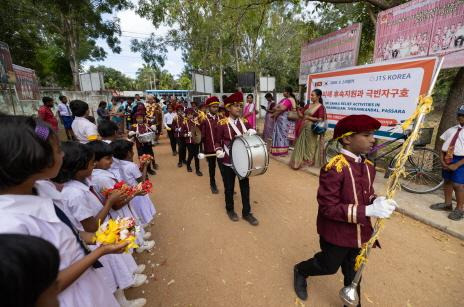
When the team arrived at the school, the students welcomed the JTS volunteers by placing flower garlands around their necks. A band began playing music, and a welcoming ceremony followed on the school grounds, including an incense-burning ritual and traditional performances prepared by the students.
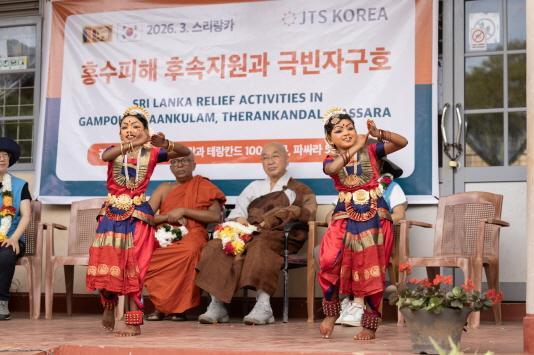
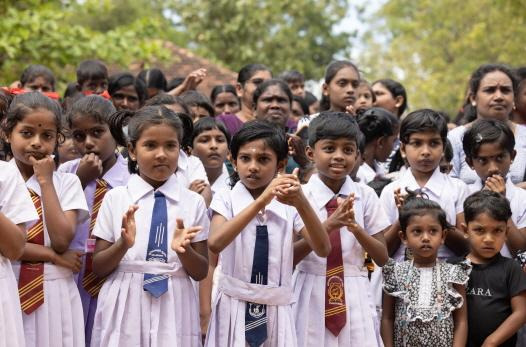
With local residents gathered together, Venerable Dhammananda delivered welcoming remarks, followed by a demonstration of the relief distribution on stage. The distribution then moved to the area in front of the storage facility, where the full-scale distribution of supplies began.

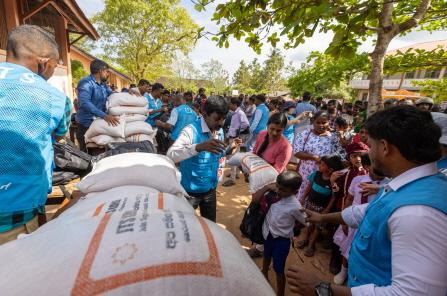
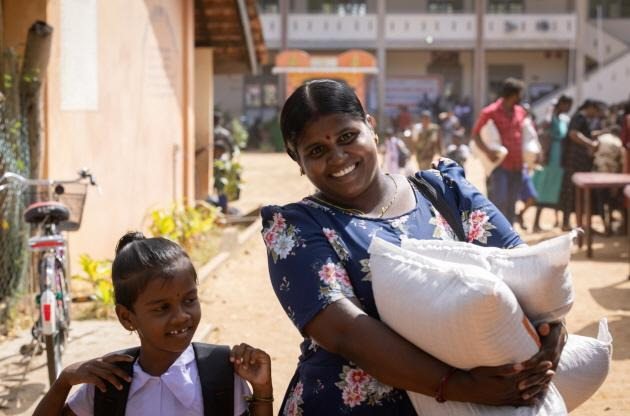
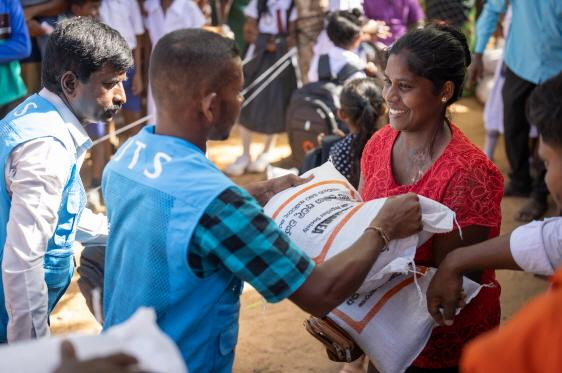
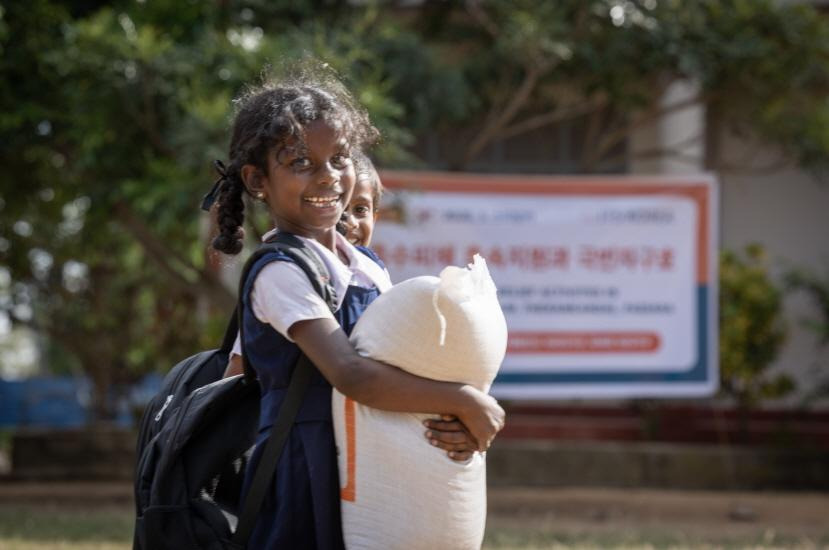
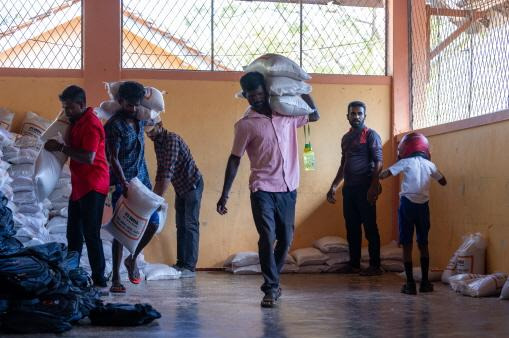
This relief distribution was conducted for 1,000 low-income households from 22 schools in the Therankanda and Mankulam areas. Each child received a school bag and educational supplies, while each household received 20 kg of rice.

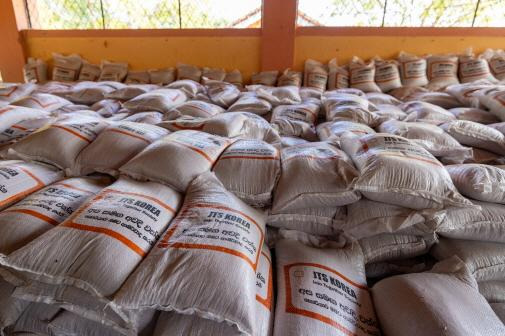
School supplies, including notebooks, pencils, sketchbooks, and water bottles, were prepared in advance by placing them inside school bags. The Sri Lanka JTS volunteers had been organizing the supplies and preparing for the distribution for two days.
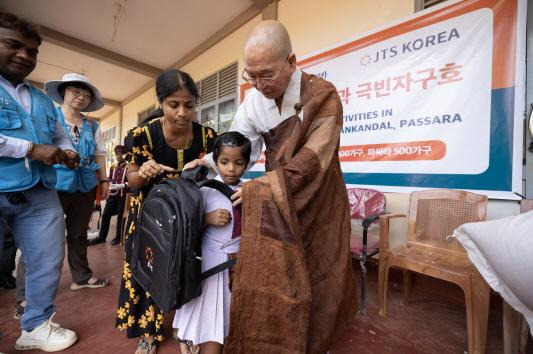
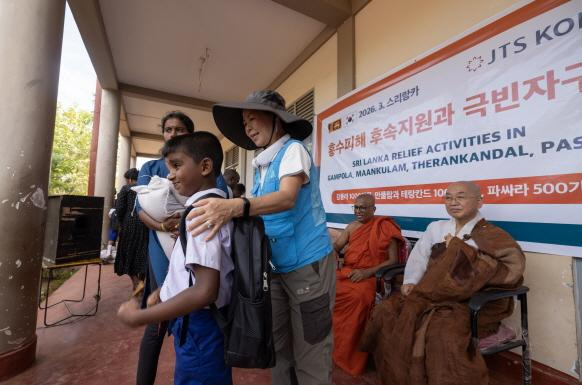
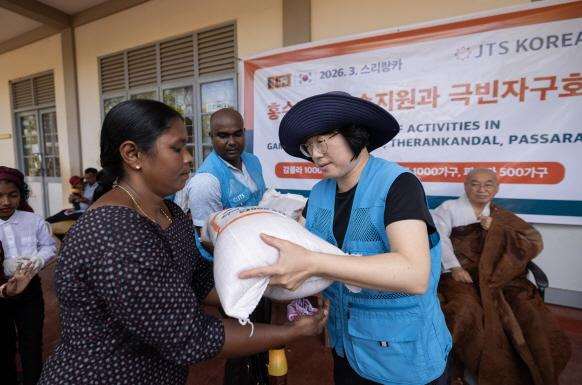
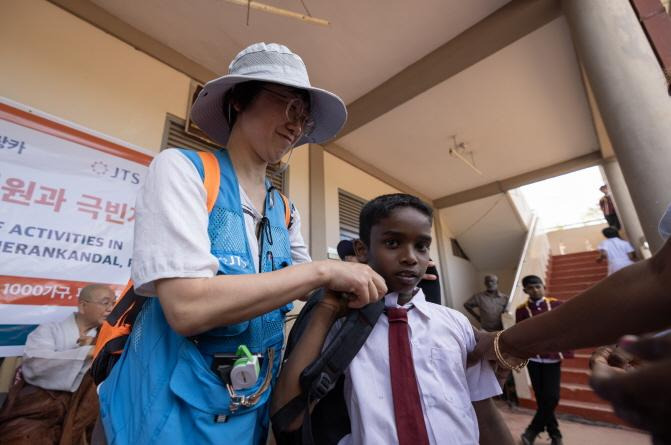
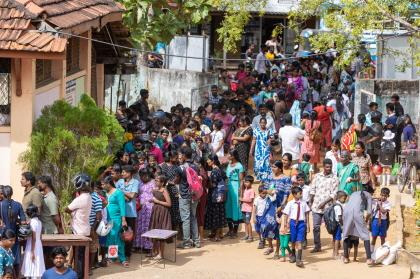
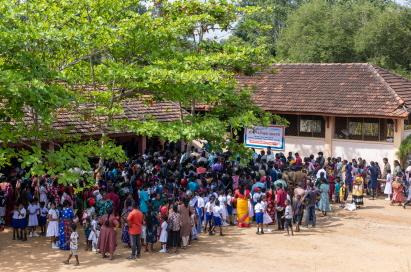
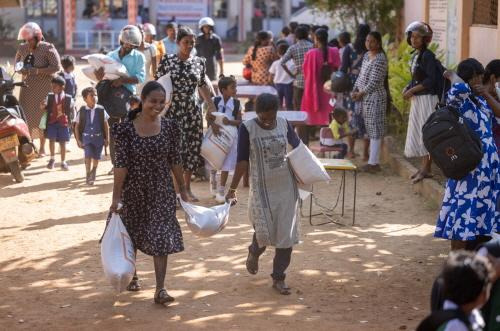
More than 2,000 residents gathered at the site, making the distribution area very crowded. However, the JTS volunteers worked together with local village volunteers to maintain order and carry out the distribution smoothly.
The children accepted the school bags with both hands, their eyes sparkling with excitement. As their parents turned to leave, carrying the heavy bags of rice on their heads or holding them tightly in their arms, they had bright smiles on their faces.
Sweating heavily as they worked, the volunteers completed the distribution, and before they knew it, it was already 4:00 p.m.
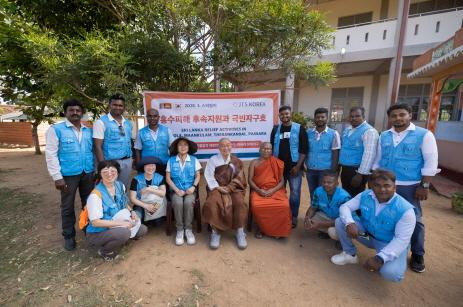
After completing the day’s volunteer activities, JTS presented mala beads (prayer beads) as gifts to the local volunteers who were returning home. The team concluded the day’s schedule by taking a commemorative photo together.
Through the distribution of relief supplies, essential support was delivered to 1,000 extremely low-income households in the Mankulam and Therankanda areas. This visit went beyond a one-time distribution effort. Based on the on-site assessments conducted during the trip, JTS plans to continue exploring ways to provide ongoing support in the future.