[Indonesia] Day 1 of Emergency Relief Supply Distribution for Flood-Affected Communities
January 17, 2026 –
Day 1 of Emergency Relief Distribution for Flood Victims in Indonesia
January 17 marked the first day of distributing emergency relief supplies to communities affected by the devastating floods in Indonesia. Amir, who has been providing tremendous support for this relief effort in many ways, warmly welcomed the JTS team upon arrival.
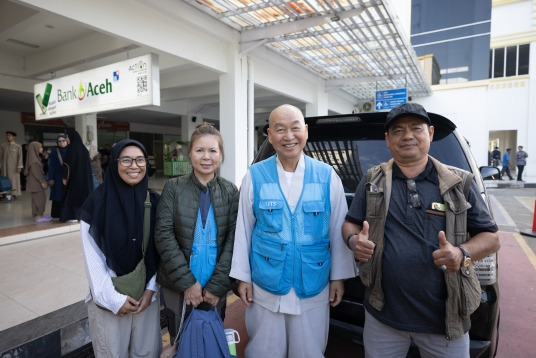
At 8:50 a.m., we departed Banda Aceh Airport and drove for four hours without a break. The scenery outside the window appeared peaceful until we approached the Pusangan area. Once inside the disaster zone, piles of mud began to appear along the roadsides. In some places, entire villages were buried beneath mud, with only the rooftops of houses visible.
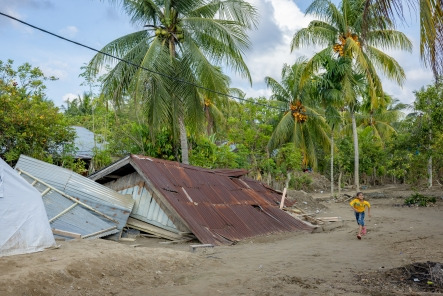
Relief Support in Krueng Beukah Village
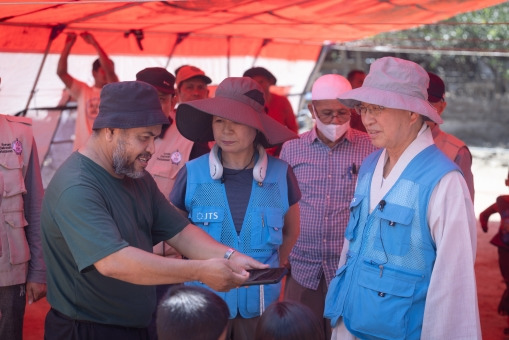
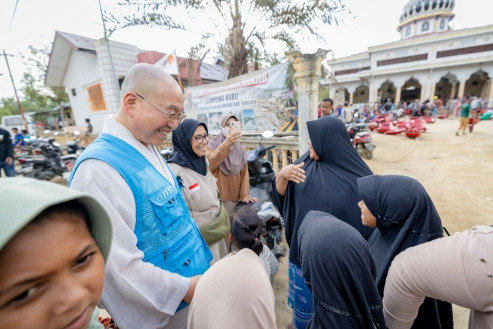
At 1:00 p.m., we arrived at Krueng Beukah, the first flood-affected village in the Pusangan area. Of the village’s 95 households, 82 had suffered flood damage. Volunteers from JTS’s local partner organization, the Forum Dakwah Perbatasan (FDP), together with village residents, warmly welcomed Venerable Pomnyun Sunim, Chairman of JTS, and Jina Park, Executive Director of JTS.
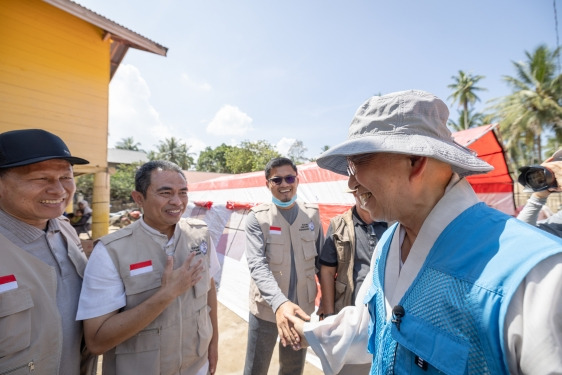
“Assalamu Alaikum” (“Peace be upon you”).
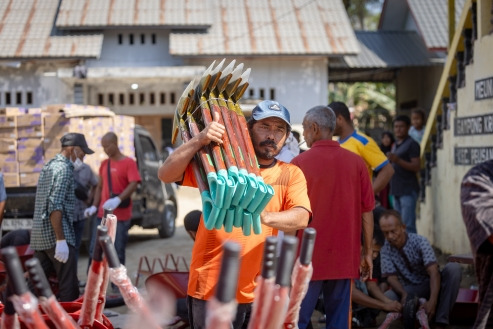
After exchanging greetings, Sunim first checked the status of the relief supplies. Preparations were underway to distribute one set of relief tools to each affected household. Each set consisted of a wheelbarrow, shovel, hoe, squeegee, and work gloves.
For this first phase of emergency relief, the JTS team prioritized providing cleaning tools needed to remove the thick layers of mud that had accumulated inside homes. During an earlier assessment visit, the team had hoped to include kitchen utensils as well, but widespread flood damage across Aceh Province made it impossible to secure sufficient quantities. Fortunately, cleaning equipment and gas stoves were available in large quantities from Medan, a nearby major city.
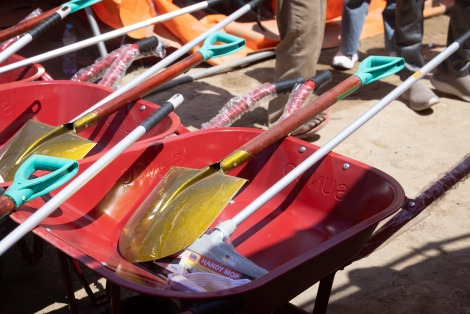
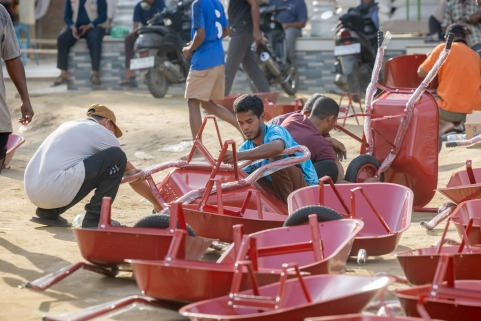
Upon arrival, however, the team discovered an unexpected challenge: the wheelbarrows had not arrived fully assembled. Because they had to be transported over a long distance, assembly would need to take place on site. FDP volunteers and village residents were carefully unpacking the components and assembling the wheelbarrows piece by piece.
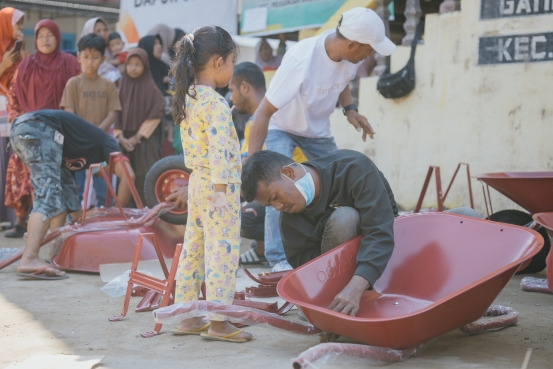
When the JTS team arrived, only eight wheelbarrows had been assembled. To meet the needs of the village, another seventy-four still needed to be assembled. JTS staff and FDP representatives quickly gathered for an emergency discussion.
Jina Park suggested:
“Would it be possible to distribute the wheelbarrows in boxes and have each household assemble them at home?”
Sunim shook his head.
“That won’t work. Wheelbarrows require proper assembly. The bolts and nuts need to be tightened securely, and inflating the tires requires tools. We can’t provide a full set of tools to every household.”
The FDP representative added:
“We will do our best to speed up the assembly process.”
Jina Park then proposed another solution:
“There’s no other choice. Let’s ask all the men in the village to join the assembly effort. We’ll all work together and increase the pace.”
Accepting the situation, Sunim immediately joined the residents and began assembling wheelbarrows himself. The most important task was tightening the bolts and nuts securely. Holding a wrench that matched the size of the nuts, he repeatedly tightened each connection.
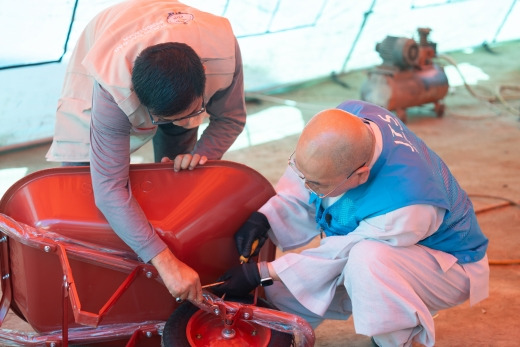
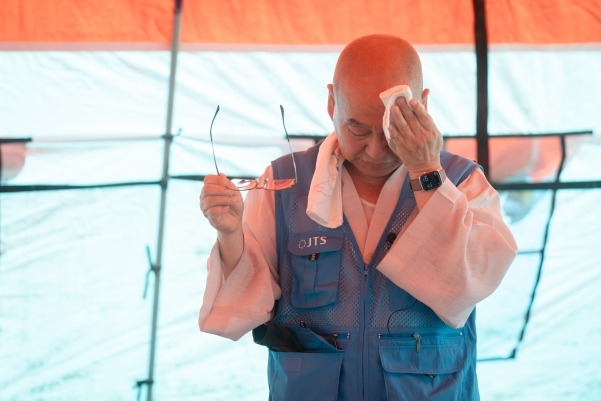
The temperature climbed to 31°C (88°F), and the humid conditions made the tent feel like a steam room. As wheelbarrows gradually took shape, sweat continuously streamed down Sunim’s face.
“It’s really hot.”
Among the available tools was a socket wrench, which made tightening the nuts much easier. While working, Sunim suggested:
“This tool provides the best leverage. If we distribute more socket wrenches and screwdrivers among the workers, the assembly process will speed up significantly. Let’s provide at least ten sets of tools for each village.”
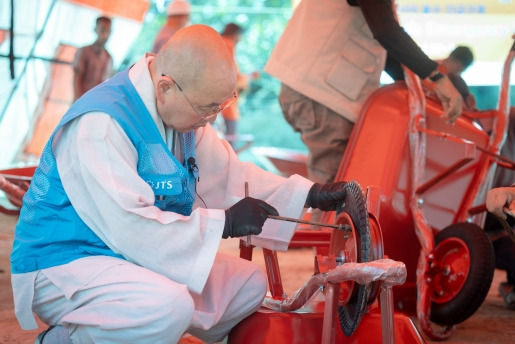
Although a few power tools helped make the work easier, they were not enough to handle the scale of the operation. Workers paired up, sharing tools and taking turns tightening bolts and nuts. Gradually, the pace improved.
Watching Sunim tighten bolts and nuts faster than anyone else, one villager raised his thumb and laughed:
“Good man!”
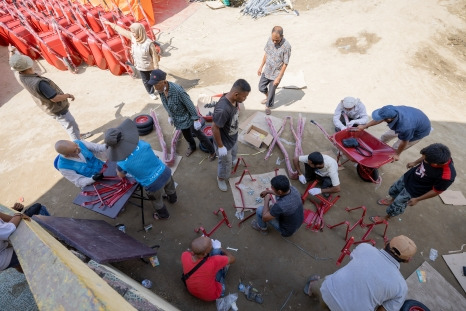
An electric air compressor was used to inflate the wheelbarrow tires. As the tires filled with air and took shape, smiles began appearing on the faces of the residents.
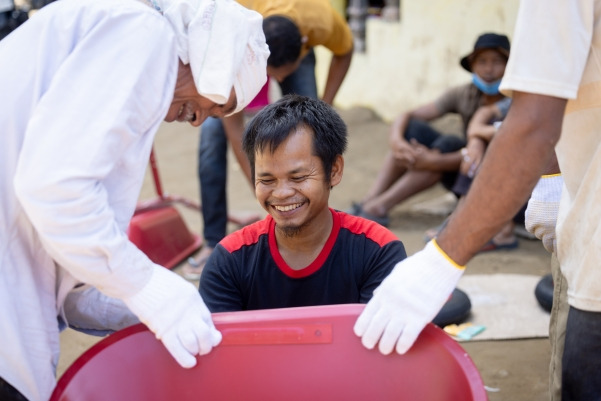
Initially, each resident had been assembling an entire wheelbarrow from start to finish. To improve efficiency, Jina Park gathered the FDP volunteers.
“Let’s organize this like a factory production line. One team can focus only on inflating tires. Another can assemble the wheelbarrow frames. If each group specializes in a single task, completed wheelbarrows will come out much faster.”
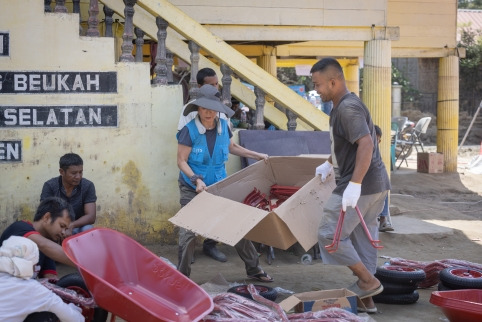
The villagers were assigned specific roles: assembling support frames, inflating tires, installing hardware, and finally tightening all bolts and nuts. Soon, completed wheelbarrows began rolling out one after another.
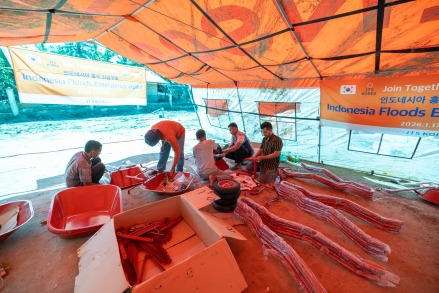
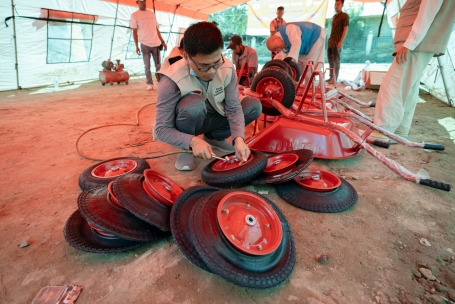
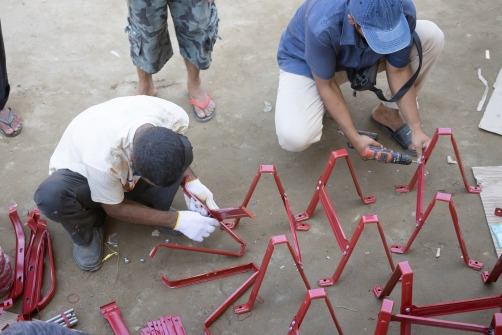
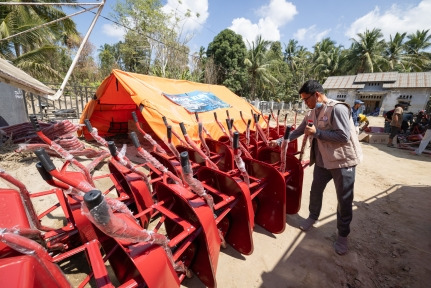
The production speed increased noticeably.
“Another one completed!” Sunim said with a smile. “The factory is running well now. Please share this method with the other villages.”
Seeing Sunim working tirelessly under the heat, villagers brought tables and chairs and moved the assembly area into the shade.
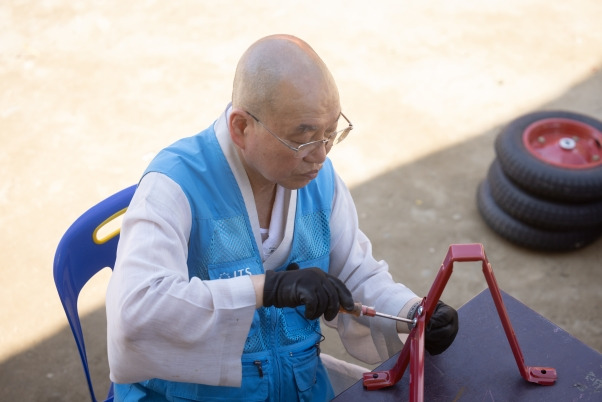
Meanwhile, a truck loaded with gas stoves arrived. FDP volunteers happily unloaded the stoves and transported them to the distribution area.
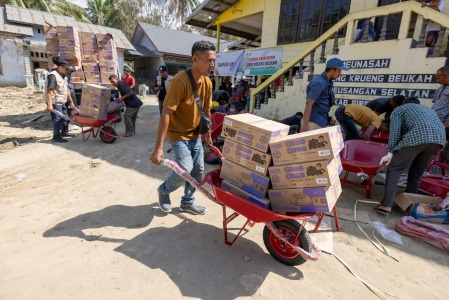
As more wheelbarrows were completed, the atmosphere became increasingly energetic. Although the villagers had lost much to the floods, they assembled the wheelbarrows with bright smiles. This was more than a relief distribution effort—it reflected the determination of the residents to rebuild their lives.
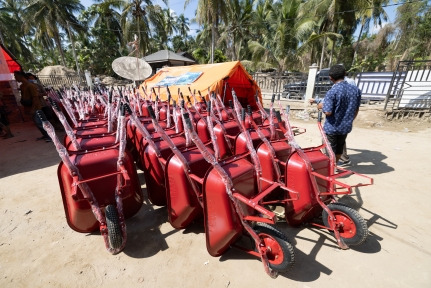
After two and a half hours of nonstop work, all 82 wheelbarrows designated for the village had been successfully assembled. The team organized the tools and arranged the relief supplies so residents could easily receive them.
Taking a brief rest, Sunim was approached by FDP representative Azhar, who placed his hand over his chest and expressed his gratitude.
“Sunim, thank you for coming all the way here to help our people. You have provided exactly what the villagers need most.”
Sunim responded with palms together in appreciation.
“What does FDP stand for?” he asked.
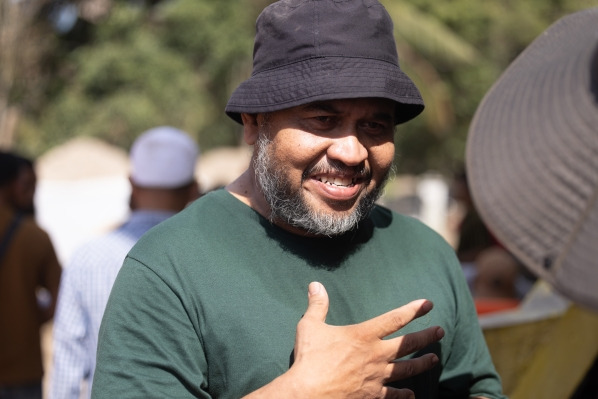
“It stands for Forum Dakwah Perbatasan, or Border Mission Forum. Regardless of religious or political differences, we provide relief and assistance to Indonesian communities in need.”
“That sounds very similar to JTS,” Sunim replied with a smile.
By then, preparations were complete, and everyone applauded together in celebration.
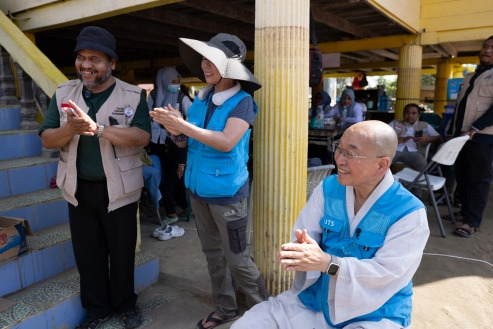
Words of Encouragement to the Villagers
Before distributing the relief supplies, Sunim shared a few words with the residents.
“The flood came suddenly and caused tremendous damage. You must have been very shocked. I first learned about the disaster through the news in Korea. I also heard the sad reports that many people had been injured and some had lost their lives.
After learning of the situation, Jina Park, Executive Director of JTS, visited the area first to assess the damage and provide initial assistance. She later reported to me that the destruction was extensive. That is why I came here myself to see the situation firsthand.
Let Us Begin by Clearing the Mud from Your Homes
When I visited your homes, I saw that many rooms were completely filled with mud. The entire house was covered in thick layers of sediment. To remove that mud, shovels are needed. To transport it outside, wheelbarrows are necessary. Some of the mud has already hardened, making hoes essential as well. That is why we prepared these items first.
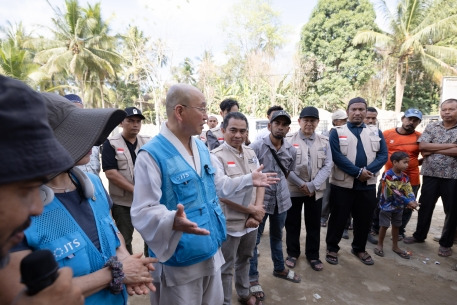
However, I do not believe our support should end here. During my visit, I saw families gathering at the mosque to share meals together. During Ramadan, families should be able to prepare meals at home, which means each household needs a gas stove. We also wanted to provide kitchen utensils and cookware, but because of the widespread flood damage across the region, it was impossible to secure enough supplies on short notice.
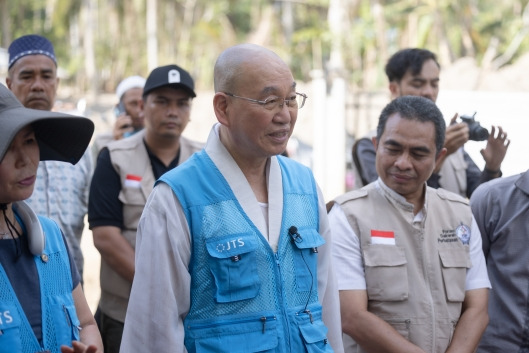
Today, we have prioritized providing the tools needed to clean your homes. I also visited the rice fields and saw that more than one meter of sediment had accumulated in many places. Restoring agricultural land will be another major challenge. JTS will continue discussing the situation with FDP and look for ways to provide further assistance.
We are able to do this work because of good local partners like FDP.
I am grateful to be here with you and to take part in this effort. These supplies may be modest, but I hope they will be useful to your families. May Allah bless your lives and your future.
Assalamu Alaikum.”
“Wa Alaikum Salam.”
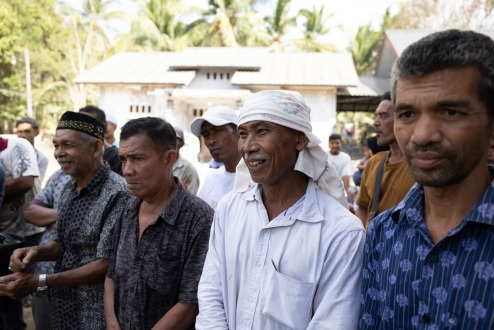
Many residents listened with tears in their eyes. Standing in front of the 82 wheelbarrows they had assembled together, they gathered for a commemorative photograph.
“Thank you, JTS!”
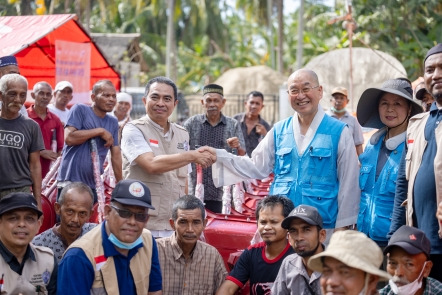
Sunim shook hands with villagers and FDP volunteers, encouraging them once again.
“Now, let us begin the distribution. Please line up and bring your wheelbarrows forward one at a time.”
Distribution of Relief Supplies
The long-awaited distribution finally began.
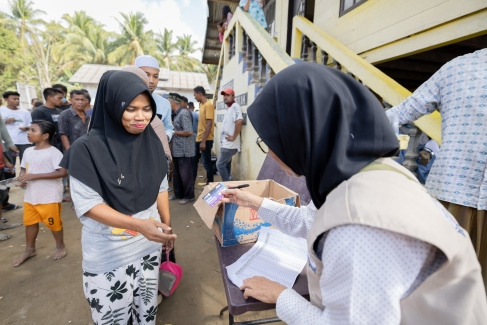
FDP volunteers had previously distributed exchange coupons to each eligible household. After the coupons were verified, residents pushed their wheelbarrows forward one by one. Sunim personally placed a gas stove into each wheelbarrow.
“Terima kasih.” (“Thank you.”)
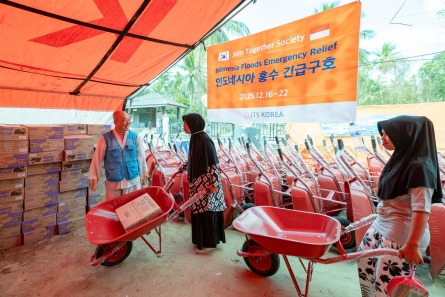
FDP volunteers then distributed the remaining items, including squeegees, shovels, hoes, and work gloves. Because wood was readily available in the village, residents agreed to make and attach the handles for the hoes themselves.
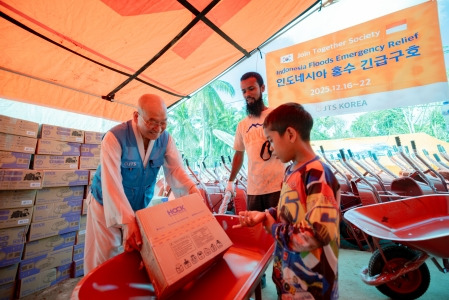
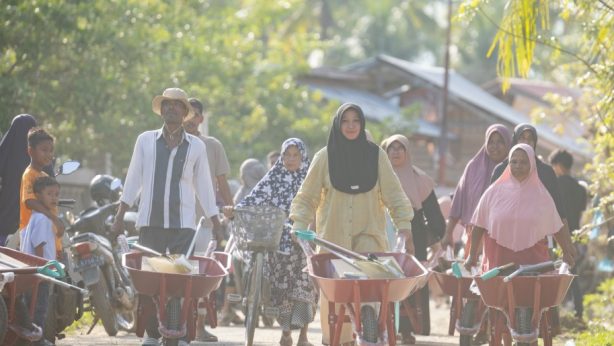
Families arrived together to receive their supplies. Fathers pulled wheelbarrows with their daughters. Mothers walked beside their sons. Grandmothers slowly pushed wheelbarrows together with their grandchildren. Although many had lost their homes and livelihoods, smiles could be seen on their faces that day.
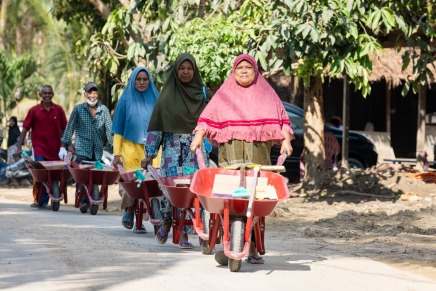
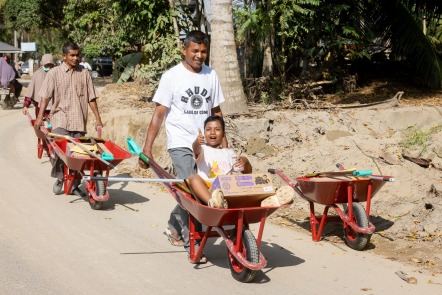
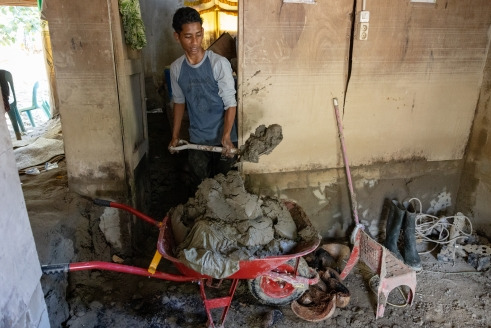
Once the supplies had been distributed, villagers immediately began the recovery process. Using the shovels and wheelbarrows, they started removing the mountains of mud that had accumulated inside and around their homes.
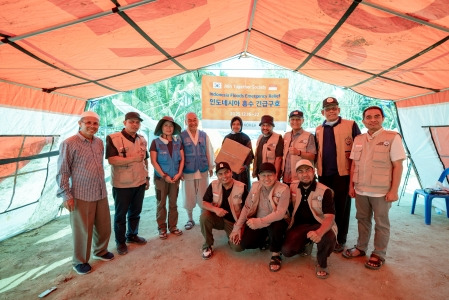
After the distribution was completed, Sunim gathered with FDP volunteers for a group photo.
“Thank you for your hard work. Now, let us move on to the next village.”
As the team prepared to leave, an elderly woman approached, pushing her wheelbarrow. She greeted Sunim and repeatedly gave him a thumbs-up. Although they did not share a common language, her gratitude was unmistakable. Through her eyes and gestures, she conveyed her heartfelt thanks.
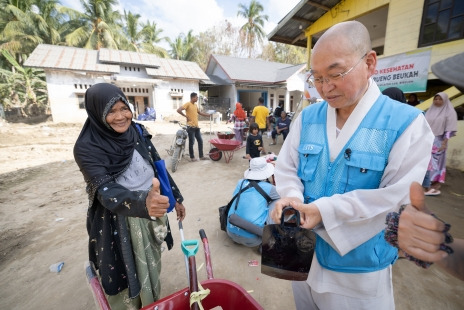
At 3:50 p.m., the distribution in Krueng Beukah Village concluded, and the team departed for the next community.
As they traveled, a river came into view through the car window. Pointing toward it,
Sunim explained:
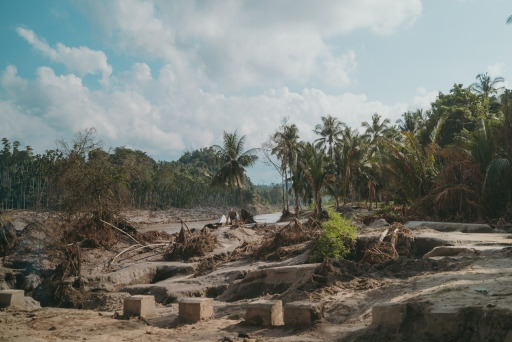
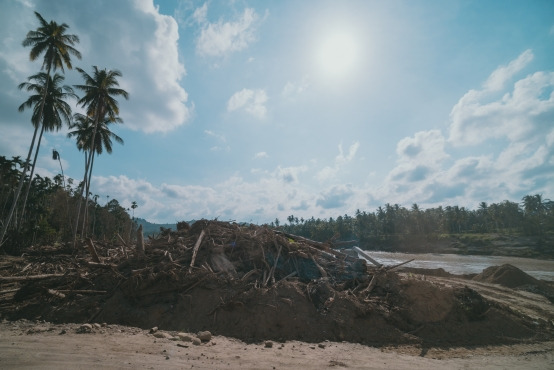
“The unusually heavy rainfall triggered landslides upstream. The resulting floodwaters overflowed this river and swept through the villages. From a distance, the forest may appear untouched, but in reality everything is buried beneath more than a meter of mud.”
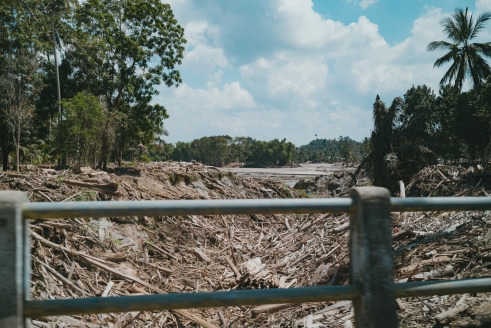
Crossing a bridge, the team saw clear evidence of the disaster. Uprooted trees lay tangled together along the riverbanks, carried downstream by the floodwaters.
Support for Kubu Village
After a twenty-minute drive, the JTS team arrived in Kubu Village at approximately 4:00 p.m.
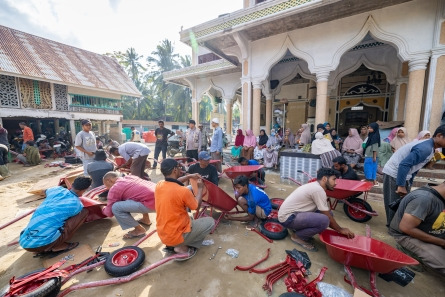
Residents had gathered at the mosque and were already assembling wheelbarrows. Kubu was a much larger community, consisting of 235 households, which meant that many more wheelbarrows needed to be assembled.
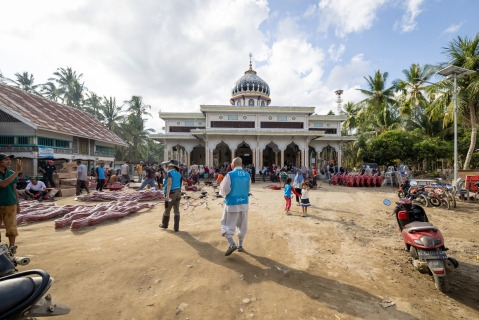
After surveying the situation, Sunim spoke with the FDP representative.
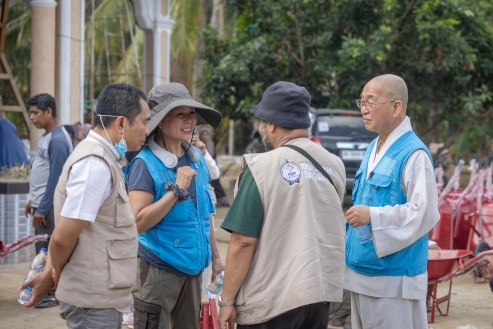
“It looks like there are no power tools here. Everyone is assembling the wheelbarrows using only wrenches and spanners. The bolts and nuts must be tightened securely to prevent problems later. Please ask all of the men in the village to join the assembly effort.”
Men who had been standing nearby soon joined the work.
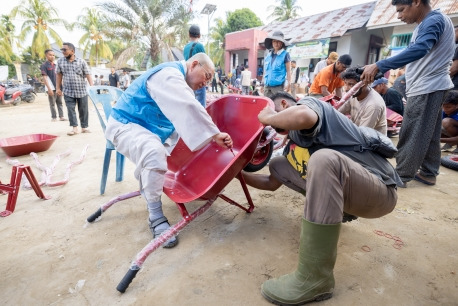
Sunim gathered the volunteers and demonstrated a more efficient assembly process. As he explained the method and worked alongside the residents, sweat continued to pour down in the tropical heat.
Although everyone worked together diligently, it became clear that completing all of the wheelbarrows before sunset would be difficult.
Sunim asked the FDP representative,
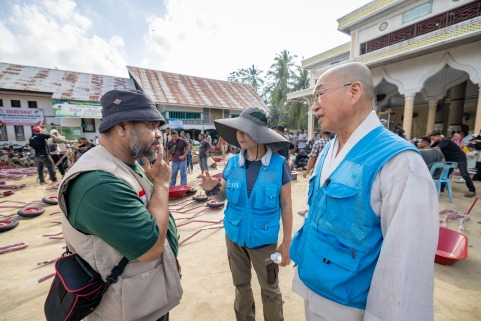
“Can the work continue after dark?”
“Yes. We can turn on the lights and continue working tonight.”
“Good. Then let us hold the distribution ceremony tomorrow morning.”
The distribution was postponed until the following day. Sunim, Jina Park, and FDP representatives then met to discuss the schedule and distribution plans for the remaining villages.
While the meeting was underway, local children ran up to greet the visitors speaking in Korean.
“Annyeonghaseyo! Kamsahamnida! Saranghaeyo!”
(“Hello! Thank you! We love you!”)
At 5:00 p.m., the team departed the village and headed to their accommodations. Later that evening, beginning at 8:00 p.m., they held a planning meeting with FDP volunteers to review the next day’s schedule and coordinate relief distribution for the remaining villages.
The meeting concluded shortly after 9:00 p.m., bringing the first day of relief activities to a close.