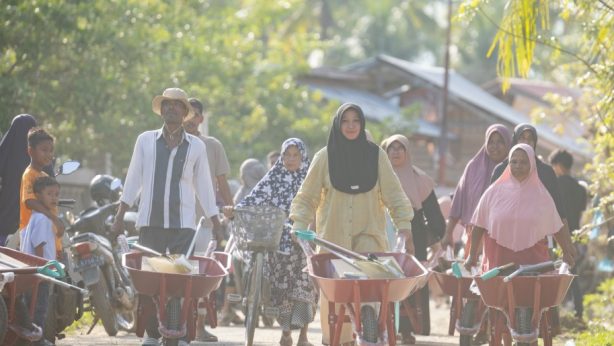
[Indonesia] Field Assessment of 9 Flood-Affected Villages in Northern Aceh
2026-03-20
Field Visit to Krueng Beukah Village
On January 9, 2026, the JTS Delegation began its second day of field assessment of flood-affected areas in Aceh, Indonesia. We set out to visit nine villages in the northern part of Aceh that had suffered the most severe damage. The first village we arrived at was Krueng Beukah, located in the Peusangan area of Aceh Province.
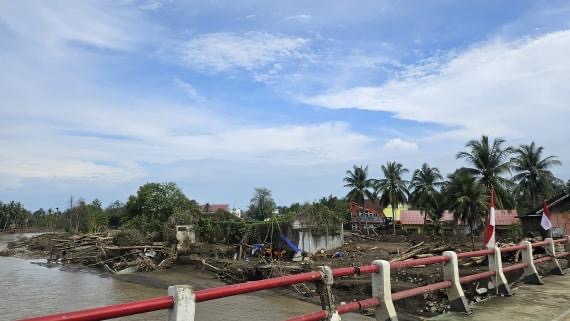
This village was home to approximately 95 households. With an average of about five members per household, the total population was around 500 people. The entire village had been flooded and covered in mud, and nearly all households were in urgent need of assistance.
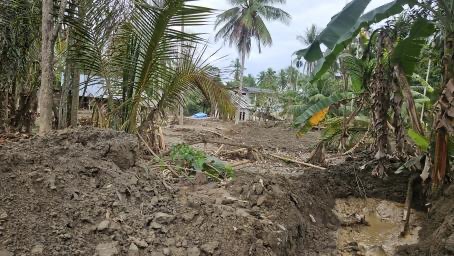
Mud had risen more than one meter, covering the houses so completely that even doors could not be opened. The entire surrounding ground level had also been raised by over one meter. The residents explained their current situation.
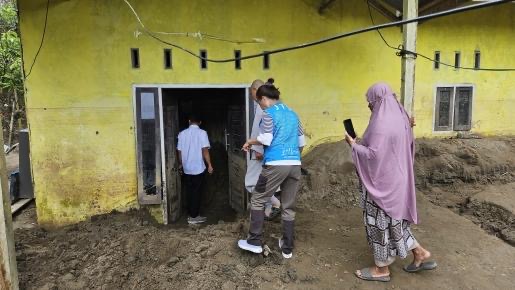
“The soil has completely covered the houses and the entire village. Even if we work hard to remove the mud from inside the homes, whenever it rains, everything returns to the way it was before.”
Venerable Pomnyun spoke with deep compassion and concern.
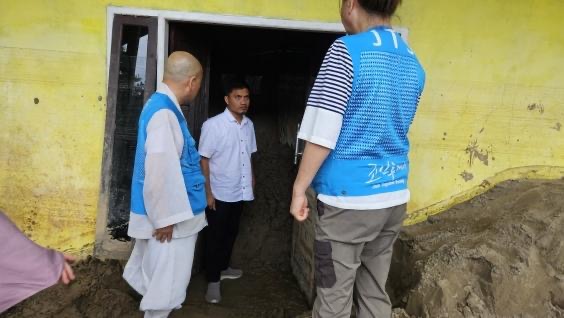
“Either all the mud that has entered the houses needs to be removed, or if that is too difficult, wouldn’t it be better to rebuild the houses on top of the accumulated soil? I don’t see people in each house—where has everyone gone?”
“They have gone to the mosque for prayers. After finishing prayers, they return home to sleep. Even though the houses are filled with mud, they lay carpets over it and sleep on top. No matter how much we remove the mud, whenever it rains, everything returns to its original state.”
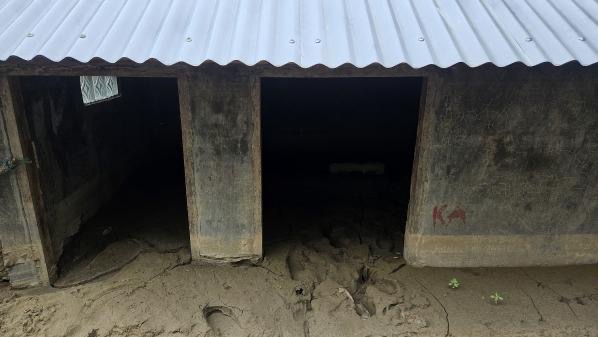
After passing through the village overwhelmed by floodwaters and mud, a wide river came into view.
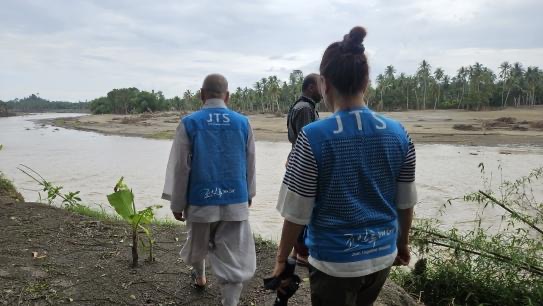
“So the river overflowed from here and reached the village. It must have rained an enormous amount for this river to overflow like this. The village on the other side seems to have suffered even more damage, because its elevation appears lower than here.”
Field Visit to Kubu Village
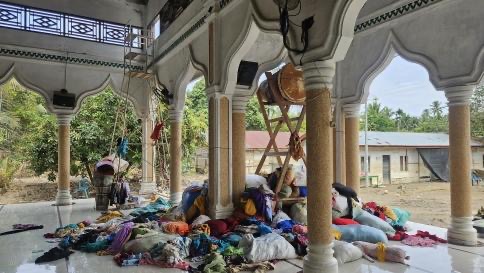
After crossing the river, the next village we visited was Kubu. Also located in the Peusangan area, Kabu was a large village with around 235 households. The team first visited the mosque. Residents whose homes had been suddenly destroyed were staying there, using the mosque as a place for both shelter and meals.
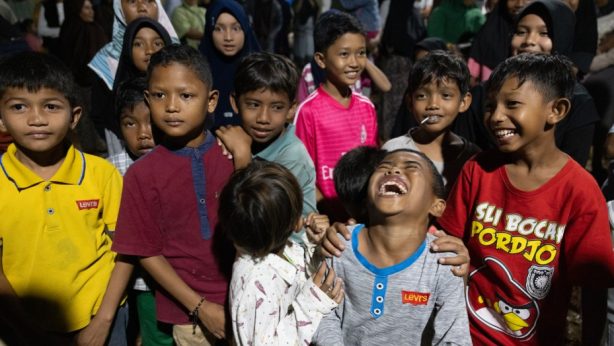
Children were playing nearby, and the team greeted them warmly.
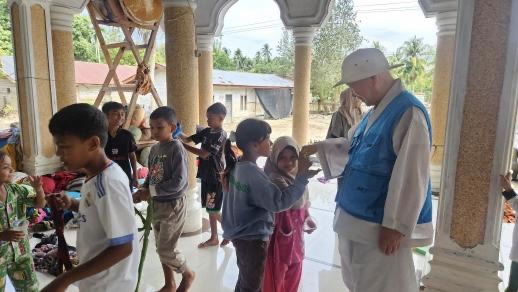
The residents explained their current situation.
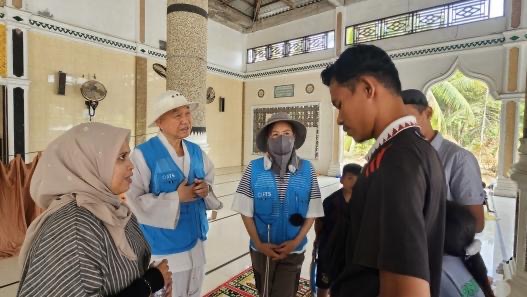
“About half of the villagers are staying and sleeping here in the mosque, while the other half go back to what remains of their homes just to sleep. All residents gather at the mosque for breakfast and dinner.
Most of the villagers are rice farmers, but all of their rice fields have been destroyed.”
After hearing the explanation, Venerable Pomnyun asked a few questions.
“So does the land need to be rehabilitated before farming can resume?”
“We hope the government will restore and prepare the land so that we can farm again.”
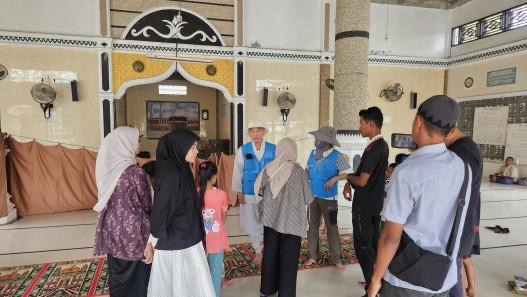
“The soil has covered the village so much that the houses are now lower than the surrounding ground. Whenever it rains, mud flows back into the homes. How can this problem be solved?”
“At present, there is no solution.”
“Would it not be possible to relocate entirely to higher ground?”
“We cannot leave this place because we depend on it for farming and our livelihood.”
On one side of the mosque, a temporary tarp had been set up, and various kitchen utensils were stored there for communal cooking.
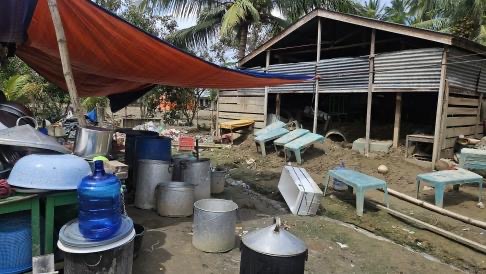
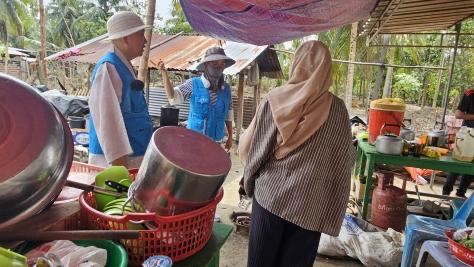
“Is the reason everyone gathers here to eat because individual households don’t have cooking utensils?”
“Our homes are filled with mud, so we cannot cook inside.”
“How many people eat here?”
“About 700 people.”
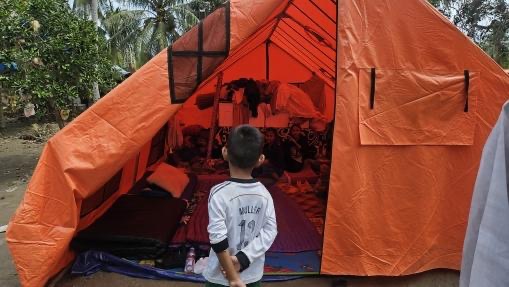
Residents whose homes had been completely destroyed were living in temporary tents.
As the team entered deeper into the village, we came across the house of the village head near the entrance. Venerable Pomnyun then asked the village head some questions.
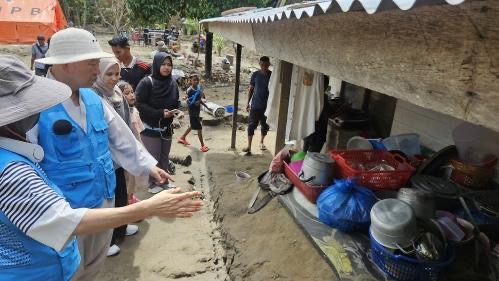
“If all the mud inside the house is removed, can you live here again? Or is it useless no matter how much mud is cleared?”
“We need to level the land first, and then somehow continue living in these houses. The soil has to be pushed out with tractors, but we do not have the capacity to do that.”
“Is there any possibility that the government would remove the mud from each household?”
“The government only takes care of major roads; it is not possible for them to handle each house individually.”
“Then it seems necessary to send excavators to each village to remove the mud, and build embankments around the houses so that rainwater does not flow inside. We also need to create drainage channels so that the water can flow out.”
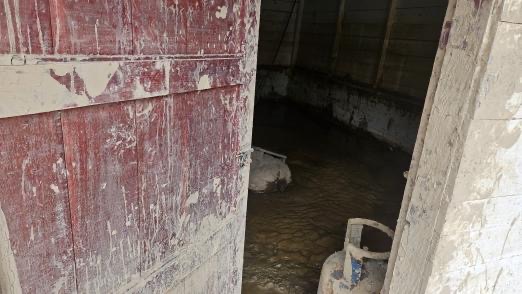
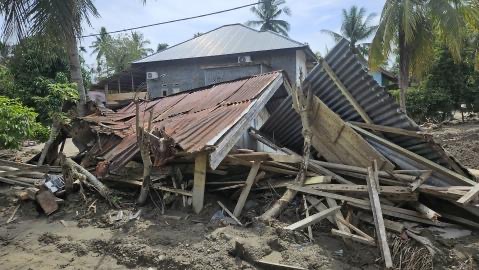
The damage in each household was much the same. Reports indicated that the rice fields had also been severely affected, so the team went to see them firsthand.
The farmland that had once been the villagers’ source of livelihood was now completely covered in mud. For people who depend on agriculture for their living, the destruction of the rice fields was not merely a natural disaster, but a threat to their survival.
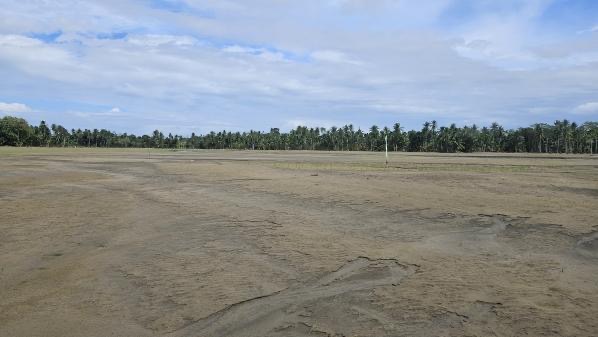
“Can farming be resumed on this land?”
“Sand has mixed into the soil, making it difficult to grow rice again. To cultivate rice again, all the sand—over one meter deep—would need to be removed. We will have to find other land. All our farmland has been destroyed.”
“If rice farming is no longer possible, what kinds of crops can villagers grow in the future?”
The villagers responded with a sigh of despair:
“We have only ever cultivated rice, so at the moment we cannot make any plans.”
Venerable Pomnyun also expressed his deep regret and concern.
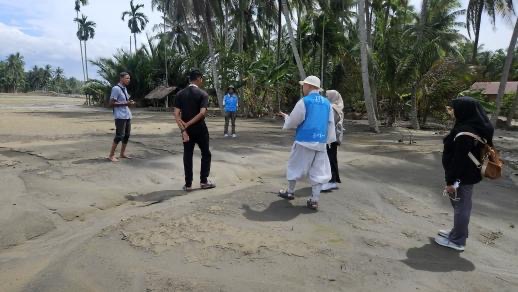
“While the immediate problem is the lack of housing, an even greater issue is that there is no way to sustain livelihoods going forward. Since all the agricultural land boundaries have been lost, this situation could instead become an opportunity for a positive transformation. If the community shifts toward large-scale collective farming—such as cultivating bananas or cassava—it could turn adversity into opportunity.”
Field Visit to Pante Baro Kumbang Village
The next village visited was Pante Baro Kumbang. Also located in the Peusangan area, it is a relatively large village with 316 households.
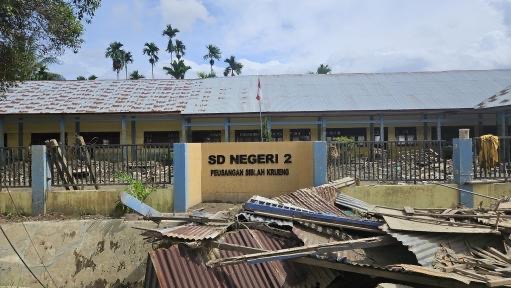
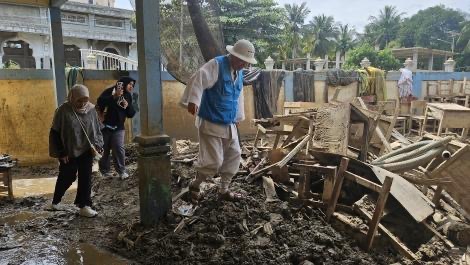
Although the village appeared relatively orderly from the outside, the deeper areas still bore clear traces of the flood. Destroyed houses on piles of mud and abandoned household items revealed their shattered everyday life.
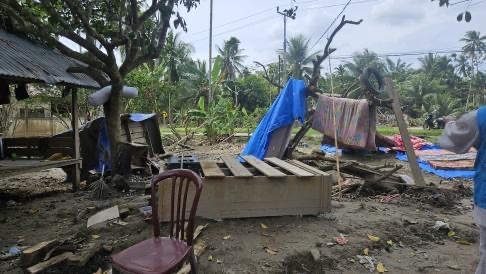
“What do you need most right now?”
“We need houses the most.”
“Do you mean you want the mud inside the houses cleared, or do you need new houses built?”
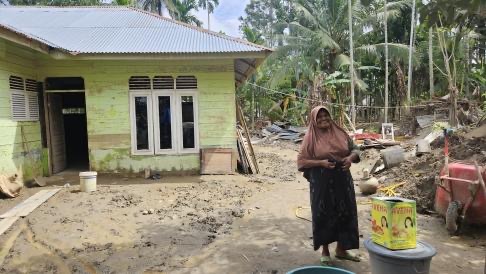
“It would be best if we could build new houses. Even if all the mud inside is removed, the house sites have become lower than the surrounding ground, so whenever it rains, mud flows back into the houses.”
“It seems necessary to bring in small excavators to remove the mud from each house, and also to provide cleaning tools such as shovels and brooms.”
Field Visit to Three Villages in Sawang District, Aceh
After lunch, the team traveled to Sawang District in Aceh to assess three villages. The first of the three villages visited was Riseh Baroh. Out of a total of 88 households, 28 had been completely swept away by floods and landslides, leaving no trace behind. The area where they once stood had now turned into a riverbed.
The residents were barely managing to secure daily meals.
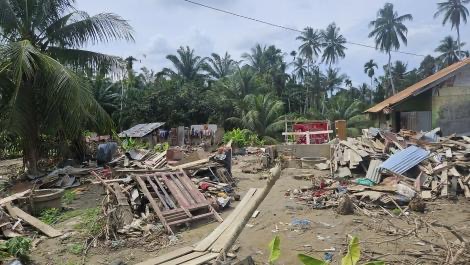
The team then proceeded to Riseh Tunong village. It is a large village consisting of 695 households. According to residents, 47 households had been completely washed away, and 170 households had been damaged. However, since these were not fully submerged areas, it was difficult to objectively verify the extent of the damage on-site. For the time being, assistance was planned only for households whose homes had completely disappeared.
Next, we visited Riseh Teungoh, a relatively small village where 32 households had been completely destroyed by floods and landslides. At the entrance to the village, piles of soil, garbage, and broken household items were scattered, making access difficult even for outsiders.
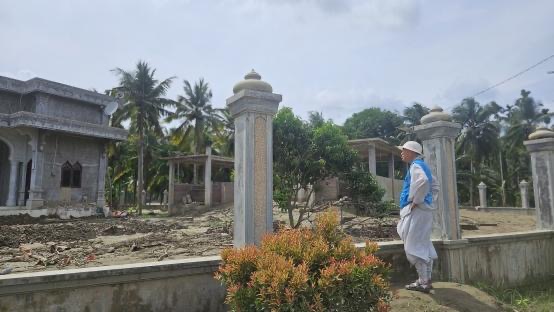
As evening approached, the team intended to visit the final three remote villages—Lhok Aja, Krueng Baro, and Lhok Bayu. However, the bridge leading into these villages had been destroyed, so we had to settle for observing the area from across the river instead.
Emergency Meeting
After completing our field assessment, we arrived at our accommodation close to 2 a.m. We held an emergency meeting for nearly three hours. During the meeting, we coordinated the schedule for the following day and discussed in detail which relief items should be prioritized for each village and how they should be distributed.
Since supplies in Banda Aceh were insufficient, we decided to travel to Medan the next day to procure relief goods. In the morning, we plan to meet with representatives of local relief organizations to discuss who should receive what types of aid and how distribution should be carried out. In the afternoon, we plan to travel to Medan and spend the entire day purchasing emergency relief supplies.