[Jamaica] JTS Delivers 200 Tons of Rice to Hurricane-Affected Communities in Jamaica
2026-06-17
After conducting a preliminary assessment in November 2025, JTS prepared a large-scale food assistance project for hurricane-affected communities in Jamaica. On May 19, 2026, JTS returned to Jamaica to begin distributing 200 tons of rice. The delegation, consisting of JTS President Gina Park, JTS America Executive Director Dughong Min, and JTS activist Sunhee Choi, worked with the local partner organization Food For The Poor (FFTP) to inspect the arrival of the rice shipment and visit several distribution sites.
Preparing the Distribution of 200 Tons of Rice with FFTP
The day after arriving in Jamaica, the JTS delegation visited the FFTP warehouse to inspect the rice shipment funded by JTS and review the distribution plan for families affected by the hurricane.
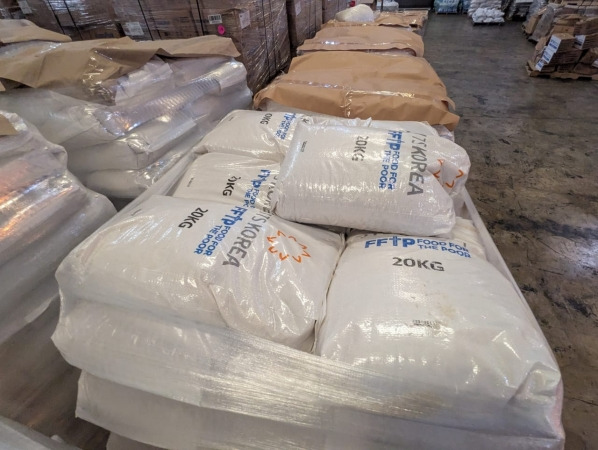
The team first toured FFTP’s warehouse to verify the condition of the rice upon arrival.
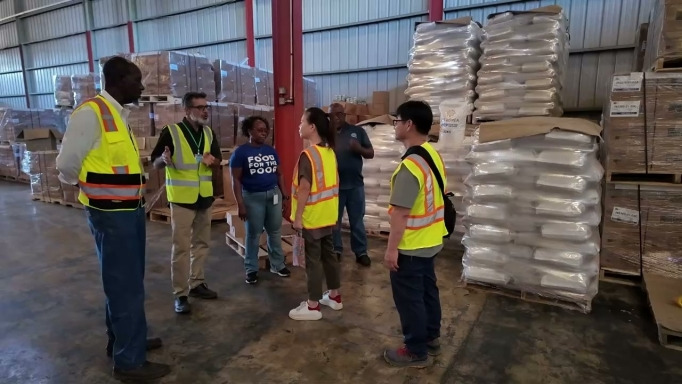
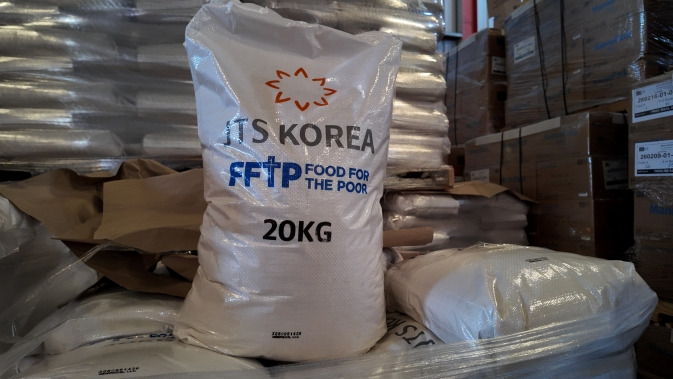
Although several shipping containers were still undergoing customs and quarantine procedures, the rice that had already arrived was in excellent condition. The FFTP staff praised both the quality of the rice and its packaging, noting that the waterproof bags had protected the rice exceptionally well during long-distance transportation with virtually no damage.
Following the warehouse inspection, representatives from both organizations introduced their respective humanitarian activities to deepen mutual understanding.
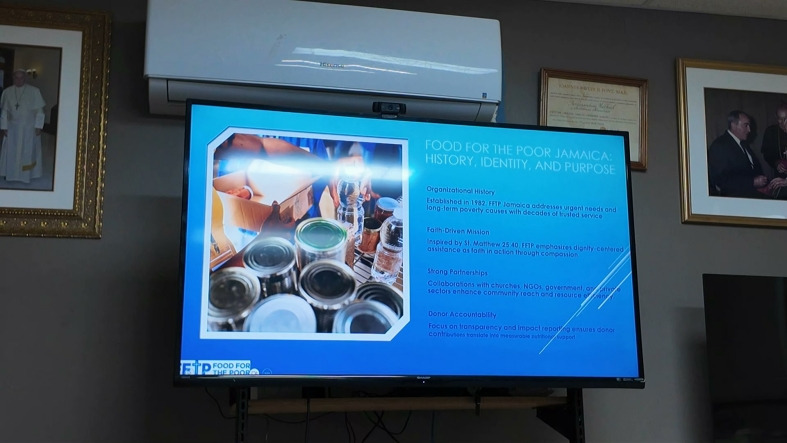
Representatives from JTS shared their experiences providing emergency relief following the floods in Pakistan and the earthquake in Indonesia, while the FFTP team explained the current situation in hurricane-affected communities and its relief network throughout Jamaica. The two teams then discussed detailed plans for distributing the 200 tons of rice.
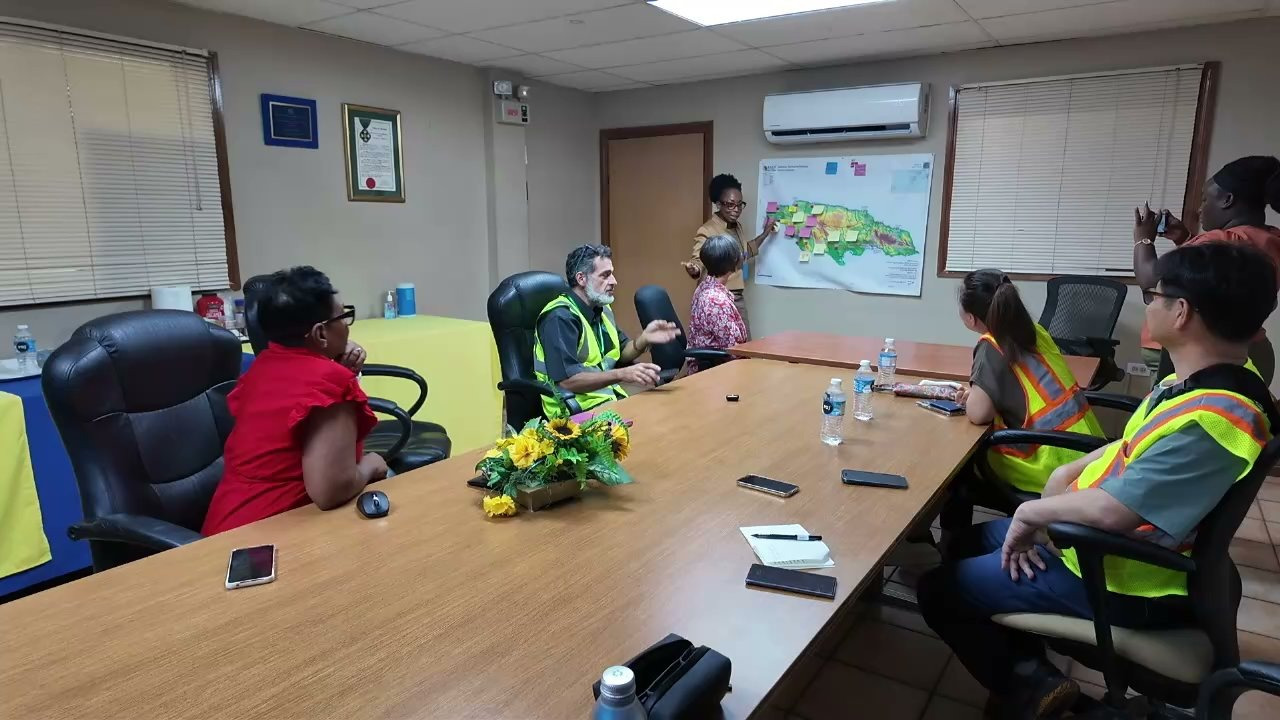
During the meeting, the FFTP team explained that approximately six months had passed since the hurricane struck, and Jamaica was transitioning from the emergency response phase into the recovery and rebuilding stage. However, many families had yet to restore their livelihoods, and the need for food assistance remained significant. The FFTP team also shared that its own rice supplies were nearly exhausted, making JTS’s timely support especially meaningful and greatly appreciated.
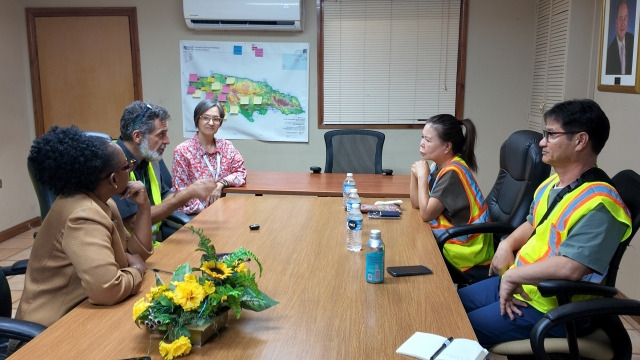
FFTP operates a long-term food assistance program centered around local schools. School meal programs help children continue attending school, while schools also serve as community distribution hubs where food can be delivered to families living throughout the surrounding areas.
In addition, FFTP works closely with churches, schools, hospitals, disability service organizations, and local Non Government Organizations (NGOs) to support vulnerable groups, including children, older adults, people with disabilities, and families affected by disasters. The rice donated by JTS will be distributed through this established network to hurricane survivors, schools, and social welfare facilities.
Since the purpose of JTS’s support was to assist hurricane victims, JTS representatives requested that priority be given to the areas that had suffered the greatest damage. The FFTP team agreed and decided to prioritize distribution in the western parishes of St. Elizabeth and Westmoreland.
Delivering Rice to Hurricane Survivors
The FFTP staff estimated that it would take at least one week to begin distributing the full 200 tons of rice. However, because the JTS delegation could not extend its stay, the FFTP staff adjusted their schedule so that the delegation could participate in distributions taking place in several communities.
Early on the morning of May 22, the JTS team traveled with FFTP staff to St. Elizabeth Parish in western Jamaica, one of the areas hardest hit by the hurricane.
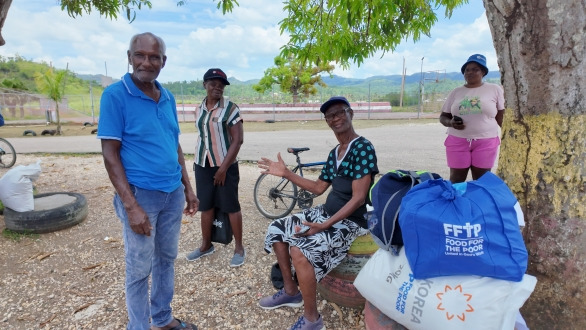
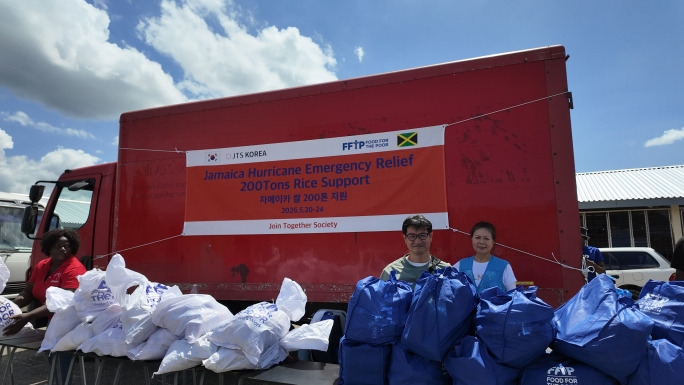
Rice distributions were carried out at Thornton Primary School and Fyfes Pen Primary and Infant School, where assistance was provided to a total of 80 households.
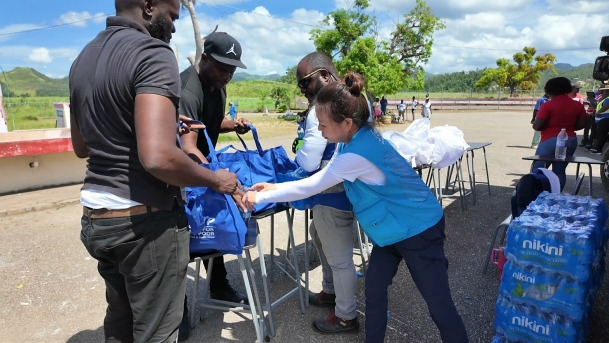
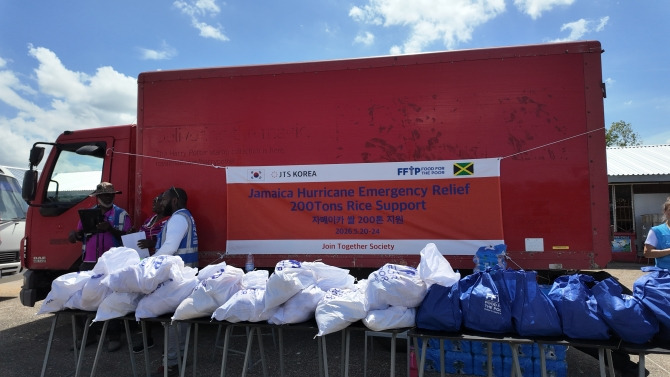
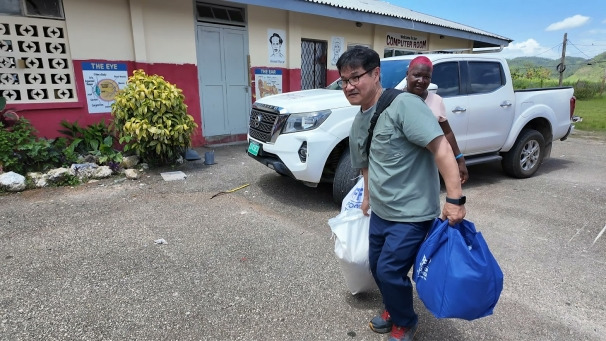
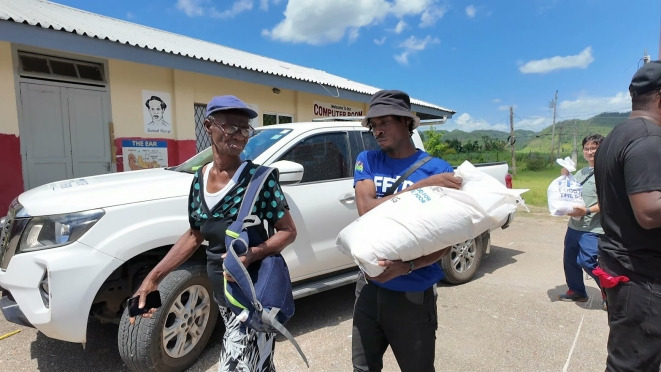
Each family received a 20-kilogram bag of rice donated by JTS, along with a food package and a hygiene kit prepared by FFTP. The food packages included canned foods, oatmeal, and ready-to-eat items, while the hygiene kits contained toilet paper, soap, toothpaste, disinfectant, and other daily necessities.
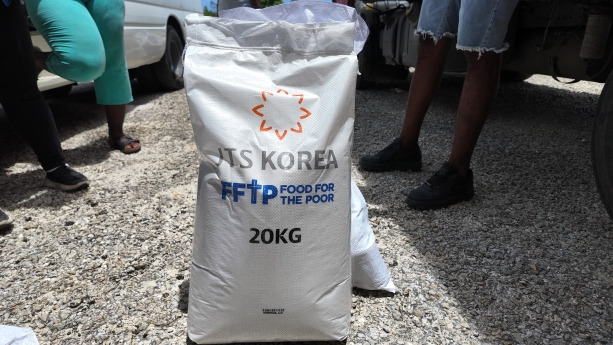
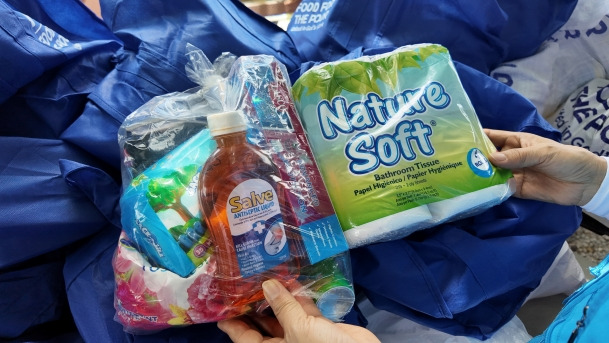
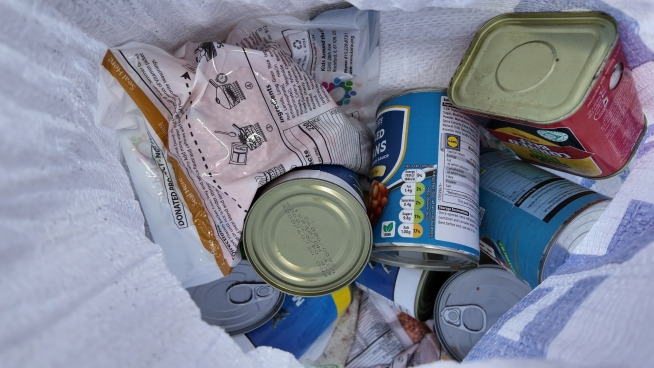
The recipients expressed heartfelt gratitude as they received the rice and essential supplies, creating a warm and encouraging atmosphere throughout the distribution.
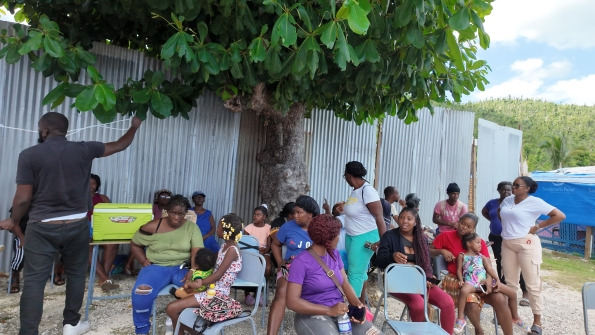
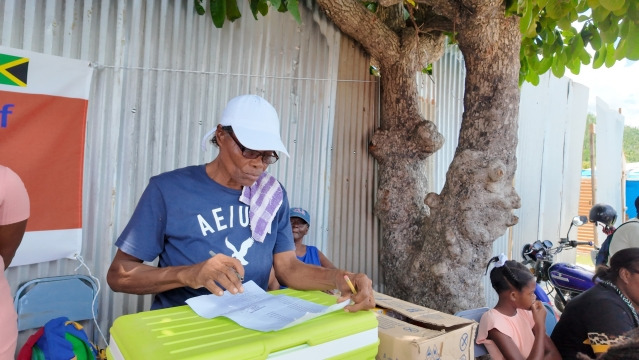
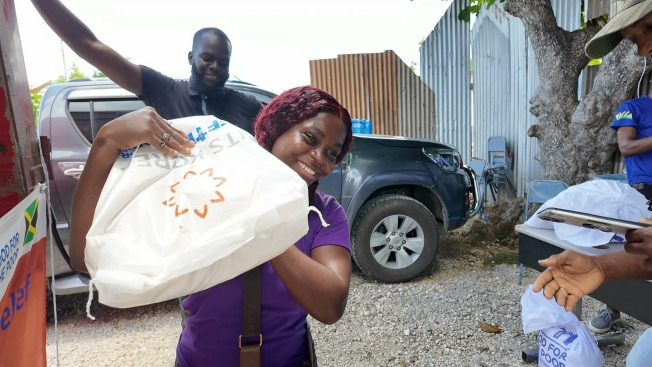
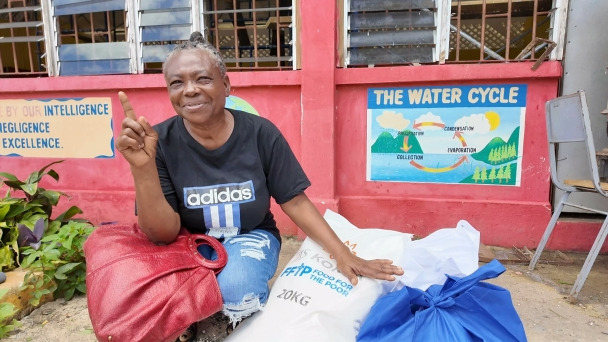
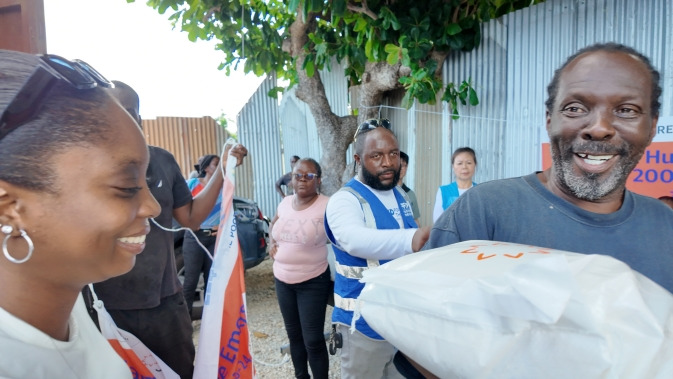
Because the combined weight of the rice and relief packages was considerable, some recipients waited for family members to help transport them, while others used cars or motorcycles to carry the supplies home.
JTS and FFTP staff worked together to assist residents with transporting the heavy items and to ensure that the distribution proceeded smoothly.
Reviewing the Distribution and Future Monitoring
After returning to the FFTP office, both organizations reviewed the day’s activities and discussed plans for monitoring future distributions.
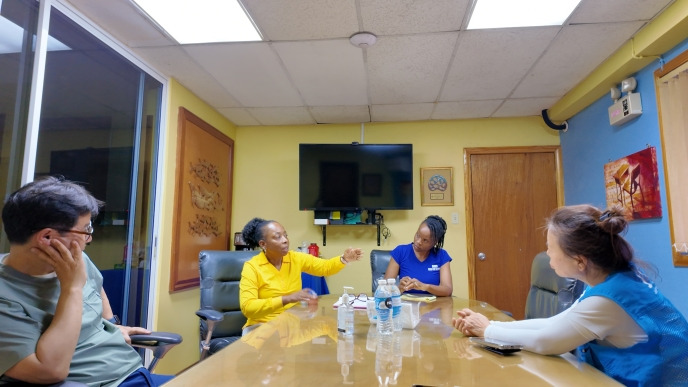
The JTS team emphasized the importance of collecting distribution photographs, videos, and regional distribution records in order to provide transparent reports to its donors. The FFTP team agreed to continue providing documentation throughout the remaining distribution process.
The JTS team also shared recommendations based on observations from the field, including improvements to beneficiary lists and recipient verification procedures. The FFTP team welcomed the suggestions and committed to strengthening its distribution system going forward.
During this visit, the JTS team directly confirmed the arrival of 150 tons of the 200 tons of rice it had provided for hurricane survivors in Jamaica and participated in distributions in several communities. The remaining 50 tons, which could not be inspected in person due to customs delays and FFTP’s internal warehouse procedures, were later verified through photographs and videos provided by FFTP.
The visit also gave JTS an opportunity to review the overall distribution plan and operational system with its local partner, ensuring that the rice would reach those who needed it most.
Most importantly, the project demonstrated that providing food assistance during the recovery phase—when international attention and emergency aid have already begun to decline—can play a vital role in helping disaster-affected families rebuild their lives.
JTS will continue working closely with its local partners while monitoring Jamaica’s ongoing recovery. We sincerely hope that families who lost their homes and livelihoods to the hurricane will soon regain stability, and JTS remains committed to delivering timely assistance wherever it is most needed.